


Page 89 - Read Online
P. 89
Yang et al. Soft Sci 2024;4:9   https://dx.doi.org/10.20517/ss.2023.43           Page 9 of 26

               Table 2. Thermal properties of Ga-based LMs and common substances
                Material         Melting points (°C)        Thermal conductivity (W·m ·K )
                                                                                 -1
                                                                                   -1
                Water            0.0                        0.599
                                                                *
                Ga               29.8                        29.4
                GaIn 20          16.0                        26.58
                GaIn             15.5                        26.58
                   24.5
                Ga In Sn 12.5    10.5                       39
                    20
                 67
                Hg               -38.9                      8.34
                Au               1,064.2                    317
                Fe               1,538.0                    80
                Cu               1,083.4                    401
                Skin             -                          0.29
                Muscle           -                          0.60
                Blood            -                          0.48
               *                   [66]
                Measured at 50 °C; Data from  ; LMs: Liquid metals.


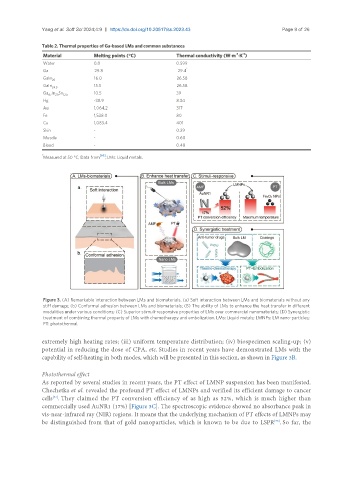
                Figure 3. (A) Remarkable interaction between LMs and biomaterials. (a) Soft interaction between LMs and biomaterials without any
                stiff damage; (b) Conformal adhesion between LMs and biomaterials; (B) The ability of LMs to enhance the heat transfer in different
                modalities under various conditions; (C) Superior stimuli-responsive properties of LMs over commercial nanomaterials; (D) Synergistic
                treatment of combining thermal property of LMs with chemotherapy and embolization. LMs: Liquid metals; LMNPs: LM nano-particles;
                PT: photothermal.

               extremely high heating rates; (iii) uniform temperature distribution; (iv) biospecimen scaling-up; (v)
               potential in reducing the dose of CPA, etc. Studies in recent years have demonstrated LMs with the
               capability of self-heating in both modes, which will be presented in this section, as shown in Figure 3B.


               Photothermal effect
               As reported by several studies in recent years, the PT effect of LMNP suspension has been manifested.
               Chechetka et al. revealed the profound PT effect of LMNPs and verified its efficient damage to cancer
               cells . They claimed the PT conversion efficiency of as high as 52%, which is much higher than
                   [47]
               commercially used AuNR1 (17%) [Figure 3C]. The spectroscopic evidence showed no absorbance peak in
               vis-near-infrared ray (NIR) regions. It means that the underlying mechanism of PT effects of LMNPs may
               be distinguished from that of gold nanoparticles, which is known to be due to LSPR . So far, the
                                                                                             [78]

