


Page 94 - Read Online
P. 94
Page 14 of 26                           Yang et al. Soft Sci 2024;4:9   https://dx.doi.org/10.20517/ss.2023.43


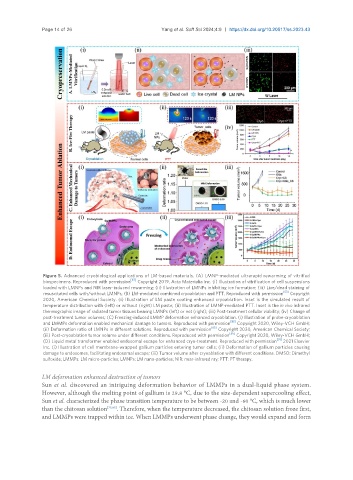
                Figure 5. Advanced cryobiological applications of LM-based materials. (A) LMNP-mediated ultrarapid rewarming of vitrified
                biospecimens. Reproduced with permission [87]  Copyright 2019, Acta Materialia Inc. (i) Illustration of vitrification of cell suspensions
                loaded with LMNPs and NIR laser-induced rewarming; (ii) Illustration of LMNPs inhibiting ice formation; (iii) Live/dead staining of
                resuscitated cells with/without LMNPs; (B) LM-mediated combined cryoablation and PTT. Reproduced with permission [53]  Copyright
                2020, American Chemical Society. (i) Illustration of LM paste coating enhanced cryoablation. Inset is the simulated result of
                temperature distribution with (left) or without (right) LM paste; (ii) Illustration of LMNP-mediated PTT. Inset is the in vivo infrared
                thermographic image of radiated tumor tissues bearing LMNPs (left) or not (right); (iii) Post-treatment cellular viability; (iv) Change of
                post-treatment tumor volumes; (C) Freezing-induced LMMP deformation enhanced cryoablation. (i) Illustration of probe-cryoablation
                and LMMPs deformation enabled mechanical damage to tumors. Reproduced with permission [85]  Copyright 2020, Wiley-VCH GmbH;
                (ii) Deformation ratio of LMNPs in different solutions. Reproduced with permission [65]  Copyright 2020, American Chemical Society;
                (iii) Post-cryoablation tumor volume under different conditions. Reproduced with permission [85]  Copyright 2020, Wiley-VCH GmbH;
                (D) Liquid metal transformer enabled endosomal escape for enhanced cryo-treatment. Reproduced with permission [91]  2021 Elsevier
                Inc. (i) Illustration of cell membrane-wrapped gallium particles entering tumor cells; (ii) Deformation of gallium particles causing
                damage to endosomes, facilitating endosomal escape; (iii) Tumor volume after cryoablation with different conditions. DMSO: Dimethyl
                sulfoxide; LMMPs: LM micro-particles; LMNPs: LM nano-particles; NIR: near-infrared ray; PTT: PT therapy.

               LM deformation enhanced destruction of tumors
               Sun et al. discovered an intriguing deformation behavior of LMMPs in a dual-liquid phase system.
               However, although the melting point of gallium is 29.8 °C, due to the size-dependent supercooling effect,
               Sun et al. characterized the phase transition temperature to be between -20 and -60 °C, which is much lower
               than the chitosan solution [75,85] . Therefore, when the temperature decreased, the chitosan solution froze first,
               and LMMPs were trapped within ice. When LMMPs underwent phase change, they would expand and form

