


Page 92 - Read Online
P. 92
Page 12 of 26                           Yang et al. Soft Sci 2024;4:9   https://dx.doi.org/10.20517/ss.2023.43


                          3+                                                  [83]
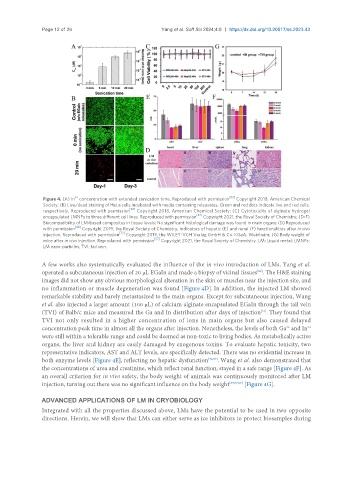
                Figure 4. (A) In  concentration with extended sonication time. Reproduced with permission   Copyright 2018, American Chemical
                Society; (B) Live/dead staining of HeLa cells incubated with media containing releasates. Green and red dots indicate live and red cells,
                respectively. Reproduced with permission [83]  Copyright 2018, American Chemical Society; (C) Cytotoxicity of alginate hydrogel
                encapsulated LMNPs to three different cell lines. Reproduced with permission [57]  Copyright 2021, the Royal Society of Chemistry; (D-F)
                Biocompatibility of LM-based composites in tissue levels: No significant histological damage was found in main organs (D) Reproduced
                with permission [40]  Copyright 2019, the Royal Society of Chemistry; Indicators of hepatic (E) and renal (F) functionalities after in vivo
                injection, Reproduced with permission [72]  Copyright 2019, the WILEY-VCH Verlag GmbH & Co. KGaA, Weinheim; (G) Body weight of
                mice after in vivo injection. Reproduced with permission [57]  Copyright 2021, the Royal Society of Chemistry. LM: Liquid metal; LMNPs:
                LM nano-particles; TVI: tail vein.

               A few works also systematically evaluated the influence of the in vivo introduction of LMs. Yang et al.
                                                                                        [89]
               operated a subcutaneous injection of 20 µL EGaIn and made a biopsy of vicinal tissues . The H&E staining
               images did not show any obvious morphological alteration in the skin or muscles near the injection site, and
               no inflammation or muscle degeneration was found [Figure 4D]. In addition, the injected LM showed
               remarkable stability and barely metastasized to the main organs. Except for subcutaneous injection, Wang
               et al. also injected a larger amount (100 μL) of calcium alginate encapsulated EGaIn through the tail vein
               (TVI) of Balb/c mice and measured the Ga and In distribution after days of injection . They found that
                                                                                         [57]
               TVI not only resulted in a higher concentration of ions in main organs but also caused delayed
               concentration peak time in almost all the organs after injection. Nonetheless, the levels of both Ga  and In
                                                                                                  3+
                                                                                                         3+
               were still within a tolerable range and could be deemed as non-toxic to living bodies. As metabolically active
               organs, the liver and kidney are easily damaged by exogenous toxins. To evaluate hepatic toxicity, two
               representative indicators, AST and ALT levels, are specifically detected. There was no evidential increase in
               both enzyme levels [Figure 4E], reflecting no hepatic dysfunction [72,89] . Wang et al. also demonstrated that
               the concentrations of urea and creatinine, which reflect renal function, stayed in a safe range [Figure 4F]. As
               an overall criterion for in vivo safety, the body weight of animals was continuously monitored after LM
               injection, turning out there was no significant influence on the body weight [39,57,85]  [Figure 4G].


               ADVANCED APPLICATIONS OF LM IN CRYOBIOLOGY
               Integrated with all the properties discussed above, LMs have the potential to be used in two opposite
               directions. Herein, we will show that LMs can either serve as ice inhibitors to protect biosamples during

