


Page 85 - Read Online
P. 85
Yang et al. Soft Sci 2024;4:9   https://dx.doi.org/10.20517/ss.2023.43           Page 5 of 26


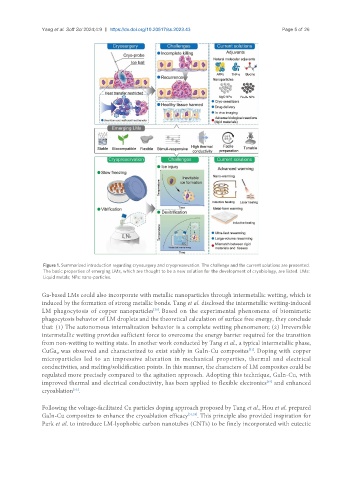
                Figure 1. Summarized introduction regarding cryosurgery and cryopreservation. The challenge and the current solutions are presented.
                The basic properties of emerging LMs, which are thought to be a new solution for the development of cryobiology, are listed. LMs:
                Liquid metals; NPs: nano-particles.

               Ga-based LMs could also incorporate with metallic nanoparticles through intermetallic wetting, which is
               induced by the formation of strong metallic bonds. Tang et al. disclosed the intermetallic wetting-induced
                                                     [50]
               LM phagocytosis of copper nanoparticles . Based on the experimental phenomena of biomimetic
               phagocytosis behavior of LM droplets and the theoretical calculation of surface free energy, they conclude
               that: (1) The autonomous internalization behavior is a complete wetting phenomenon; (2) Irreversible
               intermetallic wetting provides sufficient force to overcome the energy barrier required for the transition
               from non-wetting to wetting state. In another work conducted by Tang et al., a typical intermetallic phase,
                                                                                     [51]
               CuGa , was observed and characterized to exist stably in GaIn-Cu composites . Doping with copper
                    2
               microparticles  led  to  an  impressive  alteration  in  mechanical  properties,  thermal  and  electrical
               conductivities, and melting/solidification points. In this manner, the characters of LM composites could be
               regulated more precisely compared to the agitation approach. Adopting this technique, GaIn-Cu, with
                                                                                           [52]
               improved thermal and electrical conductivity, has been applied to flexible electronics  and enhanced
               cryoablation .
                          [53]
               Following the voltage-facilitated Cu particles doping approach proposed by Tang et al., Hou et al. prepared
               GaIn-Cu composites to enhance the cryoablation efficacy [51,53] . This principle also provided inspiration for
               Park et al. to introduce LM-lyophobic carbon nanotubes (CNTs) to be finely incorporated with eutectic

