


Page 86 - Read Online
P. 86
Page 6 of 26                            Yang et al. Soft Sci 2024;4:9   https://dx.doi.org/10.20517/ss.2023.43


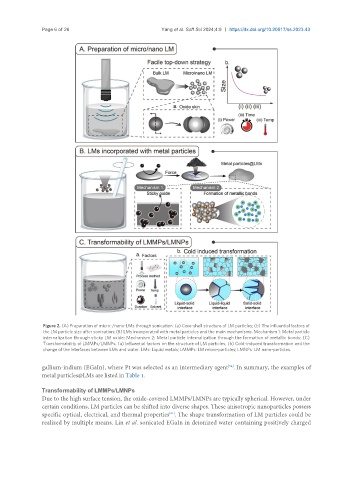
                Figure 2. (A) Preparation of micro-/nano-LMs through sonication. (a) Core-shell structure of LM particles; (b) The influential factors of
                the LM particle size after sonication; (B) LMs incorporated with metal particles and the main mechanisms. Mechanism 1: Metal particle
                internalization through sticky LM oxide; Mechanism 2: Metal particle internalization through the formation of metallic bonds; (C)
                Transformability of LMMPs/LMNPs. (a) Influential factors on the structure of LM particles; (b) Cold-induced transformation and the
                change of the interfaces between LMs and water. LMs: Liquid metals; LMMPs: LM micro-particles; LMNPs: LM nano-particles.

               gallium-indium (EGaIn), where Pt was selected as an intermediary agent . In summary, the examples of
                                                                              [54]
               metal particles@LMs are listed in Table 1.


               Transformability of LMMPs/LMNPs
               Due to the high surface tension, the oxide-covered LMMPs/LMNPs are typically spherical. However, under
               certain conditions, LM particles can be shifted into diverse shapes. These anisotropic nanoparticles possess
               specific optical, electrical, and thermal properties . The shape transformation of LM particles could be
                                                          [61]
               realized by multiple means. Lin et al. sonicated EGaIn in deionized water containing positively charged

