


Page 106 - Read Online
P. 106
Hussain et al. Soft Sci. 2025, 5, 21  https://dx.doi.org/10.20517/ss.2025.02     Page 9 of 19


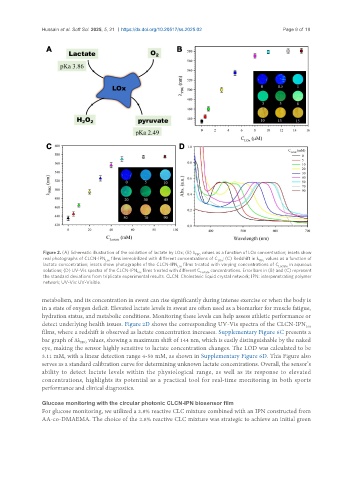
                Figure 2. (A) Schematic illustration of the oxidation of lactate by LOx; (B) λ PBG  values as a function of LOx concentration; insets show
                real photographs of CLCN-IPN  films immobilized with different concentrations of C LOx ; (C) Redshift in λ PBG  values as a function of
                                     Lox
                lactate concentration; insets show photographs of the CLCN-IPN  films treated with varying concentrations of C Lactate  in aqueous
                                                             Lox
                solutions; (D) UV-Vis spectra of the CLCN-IPN  films treated with different C Lactate  concentrations. Error bars in (B) and (C) represent
                                               Lox
                the standard deviations from triplicate experimental results. CLCN: Cholesteric liquid crystal network; IPN: interpenetrating polymer
                network; UV-Vis: UV-Visible.
               metabolism, and its concentration in sweat can rise significantly during intense exercise or when the body is
               in a state of oxygen deficit. Elevated lactate levels in sweat are often used as a biomarker for muscle fatigue,
               hydration status, and metabolic conditions. Monitoring these levels can help assess athletic performance or
               detect underlying health issues. Figure 2D shows the corresponding UV-Vis spectra of the CLCN-IPN
                                                                                                        Lox
               films, where a redshift is observed as lactate concentration increases. Supplementary Figure 6C presents a
               bar graph of Δλ  values, showing a maximum shift of 144 nm, which is easily distinguishable by the naked
                            PBG
               eye, making the sensor highly sensitive to lactate concentration changes. The LOD was calculated to be
               3.11 mM, with a linear detection range 4-50 mM, as shown in Supplementary Figure 6D. This Figure also
               serves as a standard calibration curve for determining unknown lactate concentrations. Overall, the sensor’s
               ability to detect lactate levels within the physiological range, as well as its response to elevated
               concentrations, highlights its potential as a practical tool for real-time monitoring in both sports
               performance and clinical diagnostics.

               Glucose monitoring with the circular photonic CLCN-IPN biosensor film
               For glucose monitoring, we utilized a 2.8% reactive CLC mixture combined with an IPN constructed from
               AA-co-DMAEMA. The choice of the 2.8% reactive CLC mixture was strategic to achieve an initial green

