


Page 13 - Read Online
P. 13
Wang et al. J Transl Genet Genom 2023;7:126-40  https://dx.doi.org/10.20517/jtgg.2023.07  Page 134


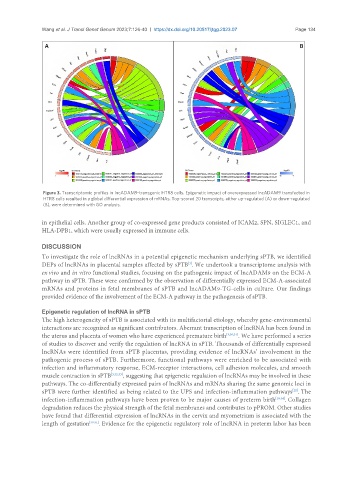
                Figure 3. Transcriptomic profiles in IncADAM9-transgenic HTR8 cells. Epigenetic impact of overexpressed IncADAM9 transfected in
                HTR8 cells resulted in a global differential expression of mRNAs. Top-scored 20 transcripts, either up-regulated (A) or down-regulated
                (B), were determined with GO analysis.

               in epithelial cells. Another group of co-expressed gene products consisted of ICAM2, SPN, SIGLEC1, and
               HLA-DPB1, which were usually expressed in immune cells.

               DISCUSSION
               To investigate the role of lncRNAs in a potential epigenetic mechanism underlying sPTB, we identified
                                                                [3]
               DEPs of lncRNAs in placental samples affected by sPTB . We undertook a transcriptome analysis with
               ex vivo and in vitro functional studies, focusing on the pathogenic impact of lncADAM9 on the ECM-A
               pathway in sPTB. These were confirmed by the observation of differentially expressed ECM-A-associated
               mRNAs and proteins in fetal membranes of sPTB and lncADAM9-TG-cells in culture. Our findings
               provided evidence of the involvement of the ECM-A pathway in the pathogenesis of sPTB.

               Epigenetic regulation of lncRNA in sPTB
               The high heterogeneity of sPTB is associated with its multifactorial etiology, whereby gene-environmental
               interactions are recognized as significant contributors. Aberrant transcription of lncRNA has been found in
               the uterus and placenta of women who have experienced premature birth [3,30,31] . We have performed a series
               of studies to discover and verify the regulation of lncRNA in sPTB. Thousands of differentially expressed
               lncRNAs were identified from sPTB placentas, providing evidence of lncRNAs’ involvement in the
               pathogenic process of sPTB. Furthermore, functional pathways were enriched to be associated with
               infection and inflammatory response, ECM-receptor interactions, cell adhesion molecules, and smooth
               muscle contraction in sPTB [3,32,33] , suggesting that epigenetic regulation of lncRNAs may be involved in these
               pathways. The co-differentially expressed pairs of lncRNAs and mRNAs sharing the same genomic loci in
               sPTB were further identified as being related to the UPS and infection-inflammation pathways . The
                                                                                                    [22]
               infection-inflammation pathways have been proven to be major causes of preterm birth [18,34] . Collagen
               degradation reduces the physical strength of the fetal membranes and contributes to pPROM. Other studies
               have found that differential expression of lncRNAs in the cervix and myometrium is associated with the
               length of gestation [30,31] . Evidence for the epigenetic regulatory role of lncRNA in preterm labor has been

