


Page 16 - Read Online
P. 16
Page 137                 Wang et al. J Transl Genet Genom 2023;7:126-40  https://dx.doi.org/10.20517/jtgg.2023.07


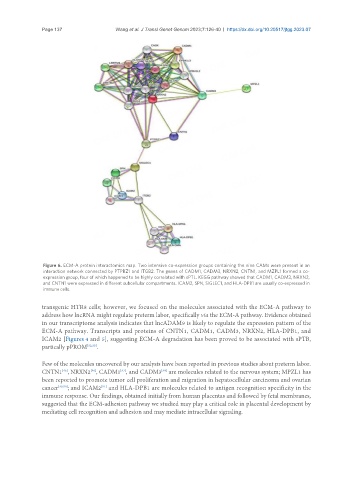
                Figure 6. ECM-A protein interactomics map. Two intensive co-expression groups containing the nine CAMs were present in an
                interaction network connected by PTPRZ1 and ITGB2. The genes of CADM1, CADM3, NRXN2, CNTN1, and MZPL1 formed a co-
                expression group, four of which happened to be highly correlated with sPTL. KEGG pathway showed that CADM1, CADM3, NRXN2,
                and CNTN1 were expressed in different subcellular compartments. ICAM2, SPN, SIGLEC1, and HLA-DPB1 are usually co-expressed in
                immune cells.


               transgenic HTR8 cells; however, we focused on the molecules associated with the ECM-A pathway to
               address how lncRNA might regulate preterm labor, specifically via the ECM-A pathway. Evidence obtained
               in our transcriptome analysis indicates that lncADAM9 is likely to regulate the expression pattern of the
               ECM-A pathway. Transcripts and proteins of CNTN1, CADM1, CADM3, NRXN2, HLA-DPB1, and
               ICAM2 [Figures 4 and 5], suggesting ECM-A degradation has been proved to be associated with sPTB,
               partically pPROM [32,33] .


               Few of the molecules uncovered by our analysis have been reported in previous studies about preterm labor.
               CNTN1 , NRXN2 , CADM1 , and CADM3  are molecules related to the nervous system; MPZL1 has
                                [46]
                                                       [48]
                      [45]
                                          [47]
               been reported to promote tumor cell proliferation and migration in hepatocellular carcinoma and ovarian
               cancer [49,50] ; and ICAM2  and HLA-DPB1 are molecules related to antigen recognition specificity in the
                                   [51]
               immune response. Our findings, obtained initially from human placentas and followed by fetal membranes,
               suggested that the ECM-adhesion pathway we studied may play a critical role in placental development by
               mediating cell recognition and adhesion and may mediate intracellular signaling.

