


Page 16 - Read Online
P. 16
Zhang et al. J Mater Inf 2024;4:34  https://dx.doi.org/10.20517/jmi.2024.64      Page 9 of 28


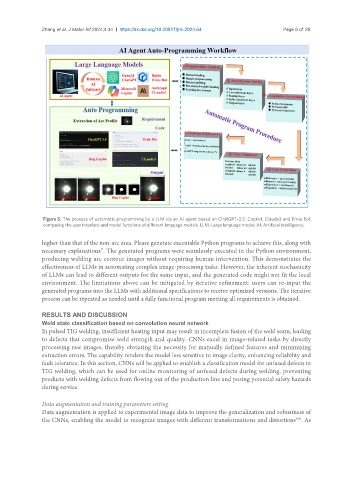
                Figure 5. The process of automatic programming by a LLM via an AI agent based on ChatGPT-3.5, Copilot, Claude3 and Ernie Bot,
                comparing the user interface and model functions of different language models. LLM: Large language model; AI: Artificial intelligence.

               higher than that of the non-arc area. Please generate executable Python programs to achieve this, along with
               necessary explanations”. The generated programs were seamlessly executed in the Python environment,
               producing welding arc contour images without requiring human intervention. This demonstrates the
               effectiveness of LLMs in automating complex image-processing tasks. However, the inherent stochasticity
               of LLMs can lead to different outputs for the same input, and the generated code might not fit the local
               environment. The limitations above can be mitigated by iterative refinement: users can re-input the
               generated programs into the LLMs with additional specifications to receive optimized versions. The iterative
               process can be repeated as needed until a fully functional program meeting all requirements is obtained.


               RESULTS AND DISCUSSION
               Weld state classification based on convolution neural network
               In pulsed TIG welding, insufficient heating input may result in incomplete fusion of the weld seam, leading
               to defects that compromise weld strength and quality. CNNs excel in image-related tasks by directly
               processing raw images, thereby obviating the necessity for manually defined features and minimizing
               extraction errors. The capability renders the model less sensitive to image clarity, enhancing reliability and
               fault tolerance. In this section, CNNs will be applied to establish a classification model for unfused defects in
               TIG welding, which can be used for online monitoring of unfused defects during welding, preventing
               products with welding defects from flowing out of the production line and posing potential safety hazards
               during service.

               Data augmentation and training parameters setting
               Data augmentation is applied to experimental image data to improve the generalization and robustness of
               the CNNs, enabling the model to recognize images with different transformations and distortions . As
                                                                                                     [88]

