


Page 11 - Read Online
P. 11
Page 4 of 28                         Zhang et al. J Mater Inf 2024;4:34  https://dx.doi.org/10.20517/jmi.2024.64

               Table 1. The chemical composition table of titanium alloy TA2
                Material         Fe         C            N             H             O       Ti
                TA2              0.027      0.0063       0.0047        < 0.001       0.10    Margin


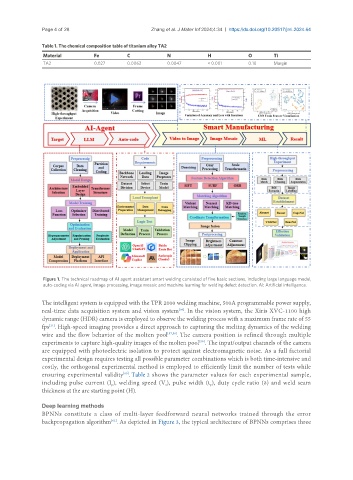
                Figure 1. The technical roadmap of AI agent assistant smart welding consisted of five basic sections, including large language model,
                auto-coding via AI agent, image processing, image mosaic and machine learning for welding defect detection. AI: Artificial intelligence.

               The intelligent system is equipped with the TPR 2000 welding machine, 500A programmable power supply,
               real-time data acquisition system and vision system . In the vision system, the Xiris XVC-1100 high
                                                             [56]
               dynamic range (HDR) camera is employed to observe the welding process with a maximum frame rate of 55
               fps . High-speed imaging provides a direct approach to capturing the melting dynamics of the welding
                  [21]
               wire and the flow behavior of the molten pool [57,58] . The camera position is refined through multiple
               experiments to capture high-quality images of the molten pool . The input/output channels of the camera
                                                                    [59]
               are equipped with photoelectric isolation to protect against electromagnetic noise. As a full factorial
               experimental design requires testing all possible parameter combinations which is both time-intensive and
               costly, the orthogonal experimental method is employed to efficiently limit the number of tests while
               ensuring experimental validity . Table 2 shows the parameter values for each experimental sample,
                                           [60]
               including pulse current (I ), welding speed (V ), pulse width (t ), duty cycle ratio (δ) and weld seam
                                       p
                                                         s
                                                                        p
               thickness at the arc starting point (H).
               Deep learning methods
               BPNNs constitute a class of multi-layer feedforward neural networks trained through the error
                                      [61]
               backpropagation algorithm . As depicted in Figure 3, the typical architecture of BPNNs comprises three

