


Page 12 - Read Online
P. 12
Zhang et al. J Mater Inf 2024;4:34  https://dx.doi.org/10.20517/jmi.2024.64      Page 5 of 28


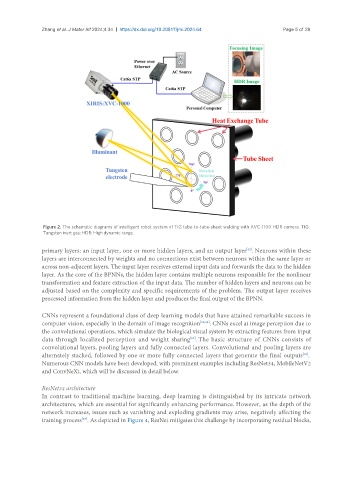
                Figure 2. The schematic diagrams of intelligent robot system of TIG tube-to-tube-sheet welding with XVC-1100 HDR camera. TIG:
                Tungsten inert gas; HDR: High dynamic range.

               primary layers: an input layer, one or more hidden layers, and an output layer . Neurons within these
                                                                                    [62]
               layers are interconnected by weights and no connections exist between neurons within the same layer or
               across non-adjacent layers. The input layer receives external input data and forwards the data to the hidden
               layer. As the core of the BPNNs, the hidden layer contains multiple neurons responsible for the nonlinear
               transformation and feature extraction of the input data. The number of hidden layers and neurons can be
               adjusted based on the complexity and specific requirements of the problem. The output layer receives
               processed information from the hidden layer and produces the final output of the BPNN.


               CNNs represent a foundational class of deep learning models that have attained remarkable success in
               computer vision, especially in the domain of image recognition [63,64] . CNNs excel at image perception due to
               the convolutional operations, which simulate the biological visual system by extracting features from input
               data through localized perception and weight sharing . The basic structure of CNNs consists of
                                                                 [65]
               convolutional layers, pooling layers and fully connected layers. Convolutional and pooling layers are
                                                                                                       [66]
               alternately stacked, followed by one or more fully connected layers that generate the final outputs .
               Numerous CNN models have been developed, with prominent examples including ResNet34, MobileNetV2
               and ConvNeXt, which will be discussed in detail below.


               ResNet34 architecture
               In contrast to traditional machine learning, deep learning is distinguished by its intricate network
               architectures, which are essential for significantly enhancing performance. However, as the depth of the
               network increases, issues such as vanishing and exploding gradients may arise, negatively affecting the
                             [67]
               training process . As depicted in Figure 4, ResNet mitigates this challenge by incorporating residual blocks,

