


Page 23 - Read Online
P. 23
Page 16 of 20                           Li et al. J Mater Inf 2024;4:27  https://dx.doi.org/10.20517/jmi.2024.44

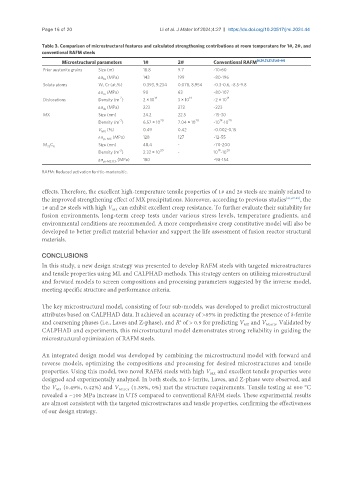
               Table 3. Comparison of microstructural features and calculated strengthening contributions at room temperature for 1#, 2#, and
               conventional RAFM steels
                      Microstructural parameters  1#         2#          Conventional RAFM [6,20,21,27,51,63-66]
                Prior austenite grains  Size (m)  18.8       9.7         ~10-60
                                  ∆  σ  (MPa)    143         199         ~80-196
                                    bs
                Solute atoms      W, Cr (at.%)   0.393, 9.234  0.078, 8.954  ~0.3-0.6, ~8.5-9.8
                                  ∆  σ  (MPa)    90          63          ~80-107
                                    ss
                                         -2          14          14          14
                Dislocations      Density (m )   2 × 10      3 × 10      ~2 × 10
                                  ∆  σ  (MPa)    223         272         ~223
                                    ds
                MX                Size (nm)      24.2        22.5        ~15-30
                                         -3            20          20      19  20
                                  Density (m )   6.57 × 10   7.04 × 10   ~10 -10
                                  V MX  (%)      0.49        0.42        ~0.002-0.15
                                  ∆  σ ps-MX  (MPa)  128     127         ~12-55
                M C               Size (nm)      48.4        -           ~70-200
                 23 6
                                                                          19
                                         -3
                                  Density (m )   2.32 × 10 20  -         10 -10 20
                                  ∆  σ   (MPa)   180                     ~98-154
                                    ps-M23C6
               RAFM: Reduced activation ferritic-martensitic.

               effects. Therefore, the excellent high-temperature tensile properties of 1# and 2# steels are mainly related to
               the improved strengthening effect of MX precipitations. Moreover, according to previous studies [21,67-69] , the
               1# and 2# steels with high V  can exhibit excellent creep resistance. To further evaluate their suitability for
                                       MX
               fusion environments, long-term creep tests under various stress levels, temperature gradients, and
               environmental conditions are recommended. A more comprehensive creep constitutive model will also be
               developed to better predict material behavior and support the life assessment of fusion reactor structural
               materials.

               CONCLUSIONS
               In this study, a new design strategy was presented to develop RAFM steels with targeted microstructures
               and tensile properties using ML and CALPHAD methods. This strategy centers on utilizing microstructural
               and forward models to screen compositions and processing parameters suggested by the inverse model,
               meeting specific structure and performance criteria.


               The key microstructural model, consisting of four sub-models, was developed to predict microstructural
               attributes based on CALPHAD data. It achieved an accuracy of >85% in predicting the presence of δ-ferrite
               and coarsening phases (i.e., Laves and Z-phase), and R  of > 0.9 for predicting V  and V M23C6 . Validated by
                                                              2
                                                                                   MX
               CALPHAD and experiments, this microstructural model demonstrates strong reliability in guiding the
               microstructural optimization of RAFM steels.

               An integrated design model was developed by combining the microstructural model with forward and
               reverse models, optimizing the compositions and processing for desired microstructures and tensile
               properties. Using this model, two novel RAFM steels with high V  and excellent tensile properties were
                                                                        MX
               designed and experimentally analyzed. In both steels, no δ-ferrite, Laves, and Z-phase were observed, and
               the V  (0.49%, 0.42%) and V M23C6  (1.38%, 0%) met the structure requirements. Tensile testing at 600 °C
                    MX
               revealed a ~100 MPa increase in UTS compared to conventional RAFM steels. These experimental results
               are almost consistent with the targeted microstructures and tensile properties, confirming the effectiveness
               of our design strategy.

