


Page 95 - Read Online
P. 95
Shu et al. J. Mater. Inf. 2025, 5, 36  https://dx.doi.org/10.20517/jmi.2025.13  Page 19 of 31


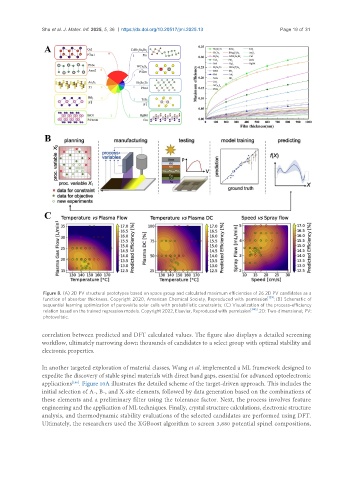
                Figure 8. (A) 2D PV structural prototypes based on space group and calculated maximum efficiencies of 26 2D PV candidates as a
                function of absorber thickness. Copyright 2020, American Chemical Society, Reproduced with  permission [139] ; (B) Schematic of
                sequential learning optimization of perovskite solar cells with probabilistic constraints; (C) Visualization of the process-efficiency
                relation based on the trained regression models. Copyright 2022, Elsevier, Reproduced with permission [140] . 2D: Two-dimensional; PV:
                photovoltaic.


               correlation between predicted and DFT calculated values. The figure also displays a detailed screening
               workflow, ultimately narrowing down thousands of candidates to a select group with optimal stability and
               electronic properties.

               In another targeted exploration of material classes, Wang et al. implemented a ML framework designed to
               expedite the discovery of stable spinel materials with direct band gaps, essential for advanced optoelectronic
               applications . Figure 10A illustrates the detailed scheme of the target-driven approach. This includes the
                         [146]
               initial selection of A-, B-, and X-site elements, followed by data generation based on the combinations of
               these elements and a preliminary filter using the tolerance factor. Next, the process involves feature
               engineering and the application of ML techniques. Finally, crystal structure calculations, electronic structure
               analysis, and thermodynamic stability evaluations of the selected candidates are performed using DFT.
               Ultimately, the researchers used the XGBoost algorithm to screen 3,880 potential spinel compositions,

