


Page 219 - Read Online
P. 219
Loh et al. Extracell Vesicles Circ Nucleic Acids 2023;4:568-87  https://dx.doi.org/10.20517/evcna.2023.34                                            Page 580


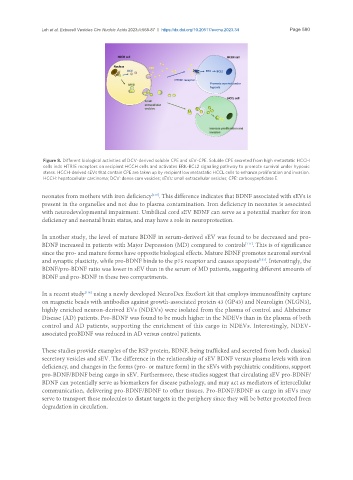
                Figure 8. Different biological activities of DCV-derived soluble CPE and sEV-CPE. Soluble CPE secreted from high metastatic HCCH
                cells inds HTR1E receptors on recipient HCCH cells and activates ERK-BCL2 signaling pathway to promote survival under hypoxic
                stress. HCCH-derived sEVs that contain CPE are taken up by recipient low metastatic HCCL cells to enhance proliferation and invasion.
                HCCH: hepatocellular carcinoma; DCV: dense core vesicles; sEVs: small extracellular vesicles; CPE: carboxypeptidase E.

               neonates from mothers with iron deficiency . This difference indicates that BDNF associated with sEVs is
                                                    [130]
               present in the organelles and not due to plasma contamination. Iron deficiency in neonates is associated
               with neurodevelopmental impairment. Umbilical cord sEV BDNF can serve as a potential marker for iron
               deficiency and neonatal brain status, and may have a role in neuroprotection.

               In another study, the level of mature BDNF in serum-derived sEV was found to be decreased and pro-
               BDNF increased in patients with Major Depression (MD) compared to controls . This is of significance
                                                                                    [111]
               since the pro- and mature forms have opposite biological effects. Mature BDNF promotes neuronal survival
                                                                                        [131]
               and synaptic plasticity, while pro-BDNF binds to the p75 receptor and causes apoptosis . Interestingly, the
               BDNF/pro-BDNF ratio was lower in sEV than in the serum of MD patients, suggesting different amounts of
               BDNF and pro-BDNF in these two compartments.

                              [116]
               In a recent study  using a newly developed NeuroDex ExoSort kit that employs immunoaffinity capture
               on magnetic beads with antibodies against growth-associated protein 43 (GP43) and Neuroligin (NLGN3),
               highly enriched neuron-derived EVs (NDEVs) were isolated from the plasma of control and Alzheimer
               Disease (AD) patients. Pro-BDNF was found to be much higher in the NDEVs than in the plasma of both
               control and AD patients, supporting the enrichment of this cargo in NDEVs. Interestingly, NDEV-
               associated proBDNF was reduced in AD versus control patients.


               These studies provide examples of the RSP protein, BDNF, being trafficked and secreted from both classical
               secretory vesicles and sEV. The difference in the relationship of sEV BDNF versus plasma levels with iron
               deficiency, and changes in the forms (pro- or mature form) in the sEVs with psychiatric conditions, support
               pro-BDNF/BDNF being cargo in sEV. Furthermore, these studies suggest that circulating sEV pro-BDNF/
               BDNF can potentially serve as biomarkers for disease pathology, and may act as mediators of intercellular
               communication, delivering pro-BDNF/BDNF to other tissues. Pro-BDNF/BDNF as cargo in sEVs may
               serve to transport these molecules to distant targets in the periphery since they will be better protected from
               degradation in circulation.

