


Page 217 - Read Online
P. 217
Loh et al. Extracell Vesicles Circ Nucleic Acids 2023;4:568-87  https://dx.doi.org/10.20517/evcna.2023.34                                            Page 578


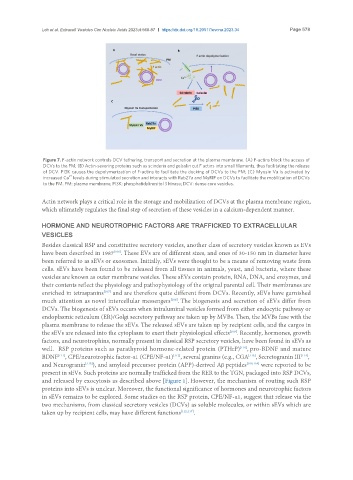
                Figure 7. F-actin network controls DCV tethering, transport and secretion at the plasma membrane. (A) F-actins block the access of
                DCVs to the PM; (B) Actin-severing proteins such as scinderin and gelsolin cut F actins into small filaments, thus facilitating the release
                of DCV. PI3K causes the depolymerization of F-actins to facilitate the docking of DCVs to the PM; (C) Myosin Va is activated by
                        2+
                increased Ca  levels during stimulated secretion and interacts with Rab27a and MyRIP on DCVs to facilitate the mobilization of DCVs
                to the PM. PM: plasma membrane; PI3K: phosphatidylinositol 3 kinase; DCV: dense core vesicles.

               Actin network plays a critical role in the storage and mobilization of DCVs at the plasma membrane region,
               which ultimately regulates the final step of secretion of these vesicles in a calcium-dependent manner.


               HORMONE AND NEUROTROPHIC FACTORS ARE TRAFFICKED TO EXTRACELLULAR
               VESICLES
               Besides classical RSP and constitutive secretory vesicles, another class of secretory vesicles known as EVs
               have been described in 1987 . These EVs are of different sizes, and ones of 30-150 nm in diameter have
                                       [106]
               been referred to as sEVs or exosomes. Initially, sEVs were thought to be a means of removing waste from
               cells. sEVs have been found to be released from all tissues in animals, yeast, and bacteria, where these
               vesicles are known as outer membrane vesicles. These sEVs contain protein, RNA, DNA, and enzymes, and
               their contents reflect the physiology and pathophysiology of the original parental cell. Their membranes are
               enriched in tetraspanins  and are therefore quite different from DCVs. Recently, sEVs have garnished
                                    [107]
                                                           [108]
               much attention as novel intercellular messengers . The biogenesis and secretion of sEVs differ from
               DCVs. The biogenesis of sEVs occurs when intraluminal vesicles formed from either endocytic pathway or
               endoplasmic reticulum (ER)/Golgi secretory pathway are taken up by MVBs. Then, the MVBs fuse with the
               plasma membrane to release the sEVs. The released sEVs are taken up by recipient cells, and the cargos in
               the sEVs are released into the cytoplasm to exert their physiological effects . Recently, hormones, growth
                                                                              [109]
               factors, and neurotrophins, normally present in classical RSP secretory vesicles, have been found in sEVs as
                                                                                  [110]
               well.  RSP proteins such as parathyroid hormone-related protein (PTHrP) , pro-BDNF and mature
                     [111]
               BDNF , CPE/neurotrophic factor-α1 (CPE/NF-α1) , several granins (e.g., CGA , Secretogranin III ,
                                                           [112]
                                                                                     [113]
                                                                                                      [114]
               and Neurogranin ), and amyloid precursor protein (APP)-derived Aβ peptides [109,116]  were reported to be
                              [115]
               present in sEVs. Such proteins are normally trafficked from the RER to the TGN, packaged into RSP DCVs,
               and released by exocytosis as described above [Figure 1]. However, the mechanism of routing such RSP
               proteins into sEVs is unclear. Moreover, the functional significance of hormones and neurotrophic factors
               in sEVs remains to be explored. Some studies on the RSP protein, CPE/NF-α1, suggest that release via the
               two mechanisms, from classical secretory vesicles (DCVs) as soluble molecules, or within sEVs which are
               taken up by recipient cells, may have different functions [112,117] .

