


Page 142 - Read Online
P. 142
Page 18 of 21          Chen et al. Energy Mater. 2025, 5, 500120  https://dx.doi.org/10.20517/energymater.2024.311


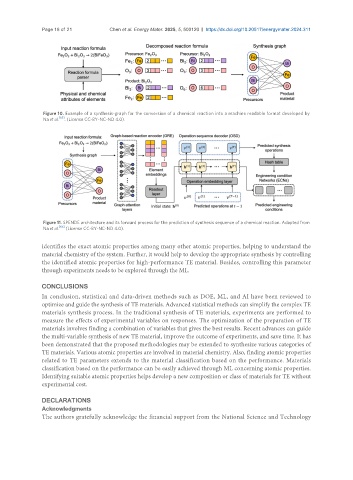
                Figure 10. Example of a synthesis-graph for the conversion of a chemical reaction into a machine readable format developed by
                Na et al. [65] . (License CC-BY-NC-ND 4.0).


                Figure 11. SPENDE architecture and its forward process for the prediction of synthesis sequence of a chemical reaction. Adapted from
                Na et al. [65]  (License CC-BY-NC-ND 4.0).

               identifies the exact atomic properties among many other atomic properties, helping to understand the
               material chemistry of the system. Further, it would help to develop the appropriate synthesis by controlling
               the identified atomic properties for high-performance TE material. Besides, controlling this parameter
               through experiments needs to be explored through the ML.


               CONCLUSIONS
               In conclusion, statistical and data-driven methods such as DOE, ML, and AI have been reviewed to
               optimize and guide the synthesis of TE materials. Advanced statistical methods can simplify the complex TE
               materials synthesis process. In the traditional synthesis of TE materials, experiments are performed to
               measure the effects of experimental variables on responses. The optimization of the preparation of TE
               materials involves finding a combination of variables that gives the best results. Recent advances can guide
               the multi-variable synthesis of new TE material, improve the outcome of experiments, and save time. It has
               been demonstrated that the proposed methodologies may be extended to synthesize various categories of
               TE materials. Various atomic properties are involved in material chemistry. Also, finding atomic properties
               related to TE parameters extends to the material classification based on the performance. Materials
               classification based on the performance can be easily achieved through ML concerning atomic properties.
               Identifying suitable atomic properties helps develop a new composition or class of materials for TE without
               experimental cost.


               DECLARATIONS
               Acknowledgments
               The authors gratefully acknowledge the financial support from the National Science and Technology

