


Page 141 - Read Online
P. 141
Chen et al. Energy Mater. 2025, 5, 500120  https://dx.doi.org/10.20517/energymater.2024.311  Page 17 of 21


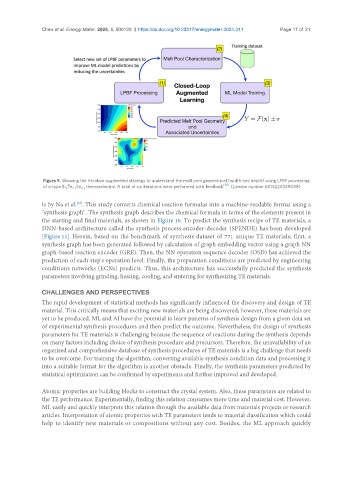
                Figure 9. Showing the iterative augmented strategy to understand the melt pool geometrical (width and depth) using LPBF processing
                of n-type Bi Te Se  thermoelectric. A total of six iterations were performed with feedback [63] . (License number 6015220339088).
                       2
                            0.3
                         2.7
                           [65]
               is by Na et al. . This study converts chemical reaction formulas into a machine-readable format using a
               "synthesis graph". The synthesis graph describes the chemical formula in terms of the elements present in
               the starting and final materials, as shown in Figure 10. To predict the synthesis recipe of TE materials, a
               DNN-based architecture called the synthesis process encoder-decoder (SPENDE) has been developed
               [Figure 11]. Herein, based on the benchmark of synthesis dataset of 771 unique TE materials; first, a
               synthesis graph has been generated followed by calculation of graph embedding vector using a graph NN
               graph-based reaction encoder (GRE). Then, the NN operation sequence decoder (OSD) has achieved the
               prediction of each step's operation level. Finally, the preparation conditions are predicted by engineering
               conditions networks (ECNs) predicts. Thus, this architecture has successfully predicted the synthesis
               parameters involving grinding, heating, cooling, and sintering for synthesizing TE materials.


               CHALLENGES AND PERSPECTIVES
               The rapid development of statistical methods has significantly influenced the discovery and design of TE
               material. This critically means that exciting new materials are being discovered; however, these materials are
               yet to be produced. ML and AI have the potential to learn patterns of synthesis design from a given data set
               of experimental synthesis procedures and then predict the outcome. Nevertheless, the design of synthesis
               parameters for TE materials is challenging because the sequence of reactions during the synthesis depends
               on many factors including choice of synthesis procedure and precursors. Therefore, the unavailability of an
               organized and comprehensive database of synthesis procedures of TE materials is a big challenge that needs
               to be overcome. For training the algorithm, converting available synthesis condition data and processing it
               into a suitable format for the algorithm is another obstacle. Finally, the synthesis parameters predicted by
               statistical optimization can be confirmed by experiments and further improved and developed.


               Atomic properties are building blocks to construct the crystal system. Also, these parameters are related to
               the TE performance. Experimentally, finding this relation consumes more time and material cost. However,
               ML easily and quickly interprets this relation through the available data from materials projects or research
               articles. Interpretation of atomic properties with TE parameters tends to material classification which could
               help to identify new materials or compositions without any cost. Besides, the ML approach quickly

