


Page 9 - Read Online
P. 9
Hao et al. Carbon Footprints 2024;3:15  https://dx.doi.org/10.20517/cf.2024.24   Page 5 of 22

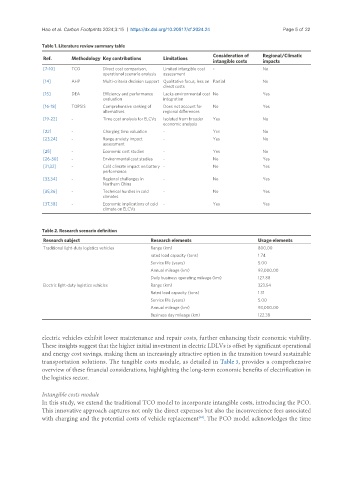
               Table 1. Literature review summary table
                                                                         Consideration of   Regional/Climatic
                Ref.     Methodology Key contributions  Limitations
                                                                         intangible costs  impacts
                [7-10]   TCO        Direct cost comparison,   Limited intangible cost   -  No
                                    operational scenario analysis  assessment
                [14]     AHP        Multi-criteria decision support Qualitative focus, less on  Partial  No
                                                        direct costs
                [15]     DEA        Efficiency and performance   Lacks environmental cost  No  Yes
                                    evaluation          integration
                [16-18]  TOPSIS     Comprehensive ranking of   Does not account for   No  Yes
                                    alternatives        regional differences
                [19-22]  -          Time cost analysis for ELCVs  Isolated from broader   Yes  No
                                                        economic analysis
                [22]     -          Charging time valuation  -           Yes              No
                [23,24]  -          Range anxiety impact   -             Yes              No
                                    assessment
                [25]     -          Economic cost studies  -             Yes              No
                [26-30]  -          Environmental cost studies  -        No               Yes
                [31,32]  -          Cold climate impact on battery  -    No               Yes
                                    performance
                [33,34]  -          Regional challenges in   -           No               Yes
                                    Northern China
                [35,36]  -          Technical hurdles in cold   -        No               Yes
                                    climates
                [37,38]  -          Economic implications of cold  -     Yes              Yes
                                    climate on ELCVs


               Table 2. Research scenario definition
                Research subject                    Research elements                   Usage elements
                Traditional light-duty logistics vehicles  Range (km)                   800.00
                                                    rated load capacity (tons)          1.74
                                                    Service life (years)                5.00
                                                    Annual mileage (km)                 93,000.00
                                                    Daily business operating mileage (km)  127.88
                Electric light-duty logistics vehicles  Range (km)                      323.54
                                                    Rated load capacity (tons)          1.31
                                                    Service life (years)                5.00
                                                    Annual mileage (km)                 93,000.00
                                                    Business day mileage (km)           122.38


               electric vehicles exhibit lower maintenance and repair costs, further enhancing their economic viability.
               These insights suggest that the higher initial investment in electric LDLVs is offset by significant operational
               and energy cost savings, making them an increasingly attractive option in the transition toward sustainable
               transportation solutions. The tangible costs module, as detailed in Table 3, provides a comprehensive
               overview of these financial considerations, highlighting the long-term economic benefits of electrification in
               the logistics sector.

               Intangible costs module
               In this study, we extend the traditional TCO model to incorporate intangible costs, introducing the PCO.
               This innovative approach captures not only the direct expenses but also the inconvenience fees associated
               with charging and the potential costs of vehicle replacement . The PCO model acknowledges the time
                                                                    [38]

