


Page 52 - Read Online
P. 52
Goyal et al. Art Int Surg. 2025;5:450-64  https://dx.doi.org/10.20517/ais.2024.108  Page 456


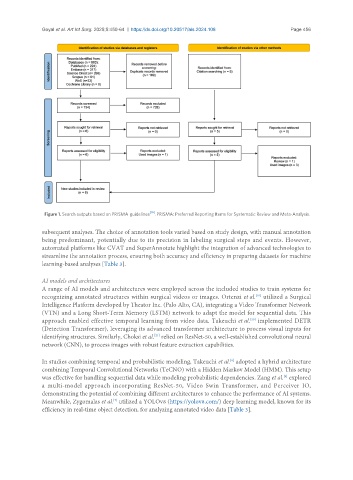
                Figure 1. Search outputs based on PRISMA guidelines [19] . PRISMA: Preferred Reporting Items for Systematic Review and Meta-Analysis.

               subsequent analyses. The choice of annotation tools varied based on study design, with manual annotation
               being predominant, potentially due to its precision in labeling surgical steps and events. However,
               automated platforms like CVAT and SuperAnnotate highlight the integration of advanced technologies to
               streamline the annotation process, ensuring both accuracy and efficiency in preparing datasets for machine
               learning-based analyses [Table 3].

               AI models and architectures
               A range of AI models and architectures were employed across the included studies to train systems for
                                                                                       [10]
               recognizing annotated structures within surgical videos or images. Ortenzi et al.  utilized a Surgical
               Intelligence Platform developed by Theator Inc. (Palo Alto, CA), integrating a Video Transformer Network
               (VTN) and a Long Short-Term Memory (LSTM) network to adapt the model for sequential data. This
               approach enabled effective temporal learning from video data. Takeuchi et al.  implemented DETR
                                                                                     [20]
               (Detection Transformer), leveraging its advanced transformer architecture to process visual inputs for
               identifying structures. Similarly, Choksi et al.  relied on ResNet-50, a well-established convolutional neural
                                                     [21]
               network (CNN), to process images with robust feature extraction capabilities.

                                                                               [8]
               In studies combining temporal and probabilistic modeling, Takeuchi et al.  adopted a hybrid architecture
               combining Temporal Convolutional Networks (TeCNO) with a Hidden Markov Model (HMM). This setup
               was effective for handling sequential data while modeling probabilistic dependencies. Zang et al.  explored
                                                                                                 [9]
               a  multi-model  approach  incorporating  ResNet-50,  Video  Swin  Transformer,  and  Perceiver  IO,
               demonstrating the potential of combining different architectures to enhance the performance of AI systems.
               Meanwhile, Zygomalas et al.  utilized a YOLOv8 (https://yolov8.com/) deep learning model, known for its
                                       [7]
               efficiency in real-time object detection, for analyzing annotated video data [Table 3].

