


Page 57 - Read Online
P. 57
Goyal et al. Art Int Surg. 2025;5:450-64  https://dx.doi.org/10.20517/ais.2024.108  Page 460


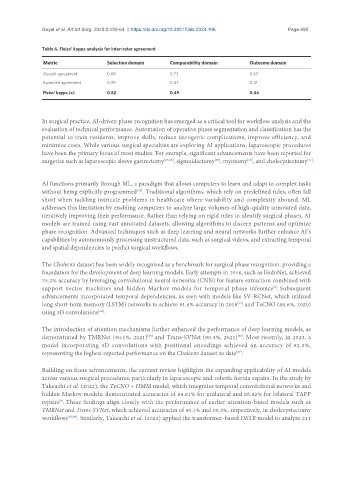
               Table 6. Fleiss’ kappa analysis for inter-rater agreement
                Metric               Selection domain     Comparability domain       Outcome domain

                Overall agreement    0.89                 0.73                       0.67
                Expected agreement   0.39                 0.47                       0.41
                Fleiss’ kappa (κ)    0.82                 0.49                       0.44


               In surgical practice, AI-driven phase recognition has emerged as a critical tool for workflow analysis and the
               evaluation of technical performance. Automation of operative phase segmentation and classification has the
               potential to train residents, improve skills, reduce iatrogenic complications, improve efficiency, and
               minimize costs. While various surgical specialties are exploring AI applications, laparoscopic procedures
               have been the primary focus of most studies. For example, significant advancements have been reported for
                                                                                    [30]
                                                                         [29]
               surgeries such as laparoscopic sleeve gastrectomy [27,28] , sigmoidectomy , myotomy , and cholecystectomy .
                                                                                                         [31]
               AI functions primarily through ML, a paradigm that allows computers to learn and adapt to complex tasks
               without being explicitly programmed . Traditional algorithms, which rely on predefined rules, often fall
                                               [32]
               short when tackling intricate problems in healthcare where variability and complexity abound. ML
               addresses this limitation by enabling computers to analyze large volumes of high-quality annotated data,
               iteratively improving their performance. Rather than relying on rigid rules to identify surgical phases, AI
               models are trained using vast annotated datasets, allowing algorithms to discern patterns and optimize
               phase recognition. Advanced techniques such as deep learning and neural networks further enhance AI’s
               capabilities by autonomously processing unstructured data, such as surgical videos, and extracting temporal
               and spatial dependencies to predict surgical workflows.


               The Cholec80 dataset has been widely recognized as a benchmark for surgical phase recognition, providing a
               foundation for the development of deep learning models. Early attempts in 2016, such as EndoNet, achieved
               75.2% accuracy by leveraging convolutional neural networks (CNN) for feature extraction combined with
               support vector machines and hidden Markov models for temporal phase inference . Subsequent
                                                                                             [9]
               advancements incorporated temporal dependencies, as seen with models like SV-RCNet, which utilized
                                                                                 [33]
               long short-term memory (LSTM) networks to achieve 81.6% accuracy in 2018  and TeCNO (88.6%, 2020)
               using 3D convolutions .
                                  [34]
               The introduction of attention mechanisms further enhanced the performance of deep learning models, as
                                                   [35]
                                                                                 [36]
               demonstrated by TMRNet (90.1%, 2021)  and Trans-SVNet (90.3%, 2021) . Most recently, in 2023, a
               model incorporating 3D convolutions with positional encodings achieved an accuracy of 92.3%,
                                                                                 [37]
               representing the highest reported performance on the Cholec80 dataset to date .
               Building on these advancements, the current review highlights the expanding applicability of AI models
               across various surgical procedures, particularly in laparoscopic and robotic hernia repairs. In the study by
               Takeuchi et al. (2022), the TeCNO + HMM model, which integrates temporal convolutional networks and
               hidden Markov models, demonstrated accuracies of 88.81% for unilateral and 85.82% for bilateral TAPP
               repairs . These findings align closely with the performance of earlier attention-based models such as
                     [8]
               TMRNet and Trans-SVNet, which achieved accuracies of 90.1% and 90.3%, respectively, in cholecystectomy
               workflows [35,36] . Similarly, Takeuchi et al. (2023) applied the transformer-based DETR model to analyze 211

