


Page 49 - Read Online
P. 49
Trahanas et al. Vessel Plus 2022;6:49  https://dx.doi.org/10.20517/2574-1209.2021.125  Page 9 of 16


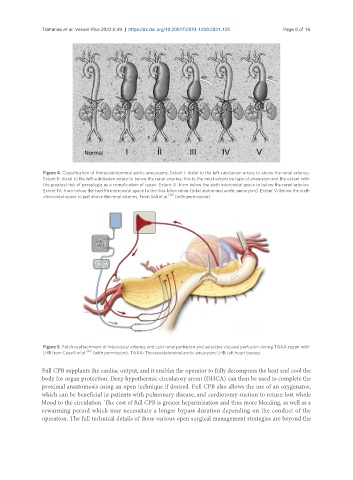
                Figure 4. Classification of thoracoabdominal aortic aneurysms. Extent I: distal to the left subclavian artery to above the renal arteries.
                Extent II: distal to the left subclavian artery to below the renal arteries; this is the most extensive type of aneurysm and the extent with
                the greatest risk of paraplegia as a complication of repair. Extent III: from below the sixth intercostal space to below the renal arteries.
                Extent IV: from below the twelfth intercostal space to the iliac bifurcation (total abdominal aortic aneurysm). Extent V: below the sixth
                                                          [36]
                intercostal space to just above the renal arteries. From Safi et al.   (with permission).


                Figure 5. Patch reattachment of intercostal arteries and cold renal perfusion and selective visceral perfusion during TAAA repair with
                              [22]
                LHB from Coselli et al.   (with permission). TAAA: Thoracoabdominal aortic aneurysm; LHB: left heart bypass.
               Full CPB supplants the cardiac output, and it enables the operator to fully decompress the heat and cool the
               body for organ protection. Deep hypothermic circulatory arrest (DHCA) can then be used to complete the
               proximal anastomosis using an open technique if desired. Full CPB also allows the use of an oxygenator,
               which can be beneficial in patients with pulmonary disease, and cardiotomy suction to return lost whole
               blood to the circulation. The cost of full CPB is greater heparinization and thus more bleeding, as well as a
               rewarming period which may necessitate a longer bypass duration depending on the conduct of the
               operation. The full technical details of these various open surgical management strategies are beyond the

