


Page 44 - Read Online
P. 44
Page 4 of 16               Trahanas et al. Vessel Plus 2022;6:49  https://dx.doi.org/10.20517/2574-1209.2021.125


                                                                               [6]
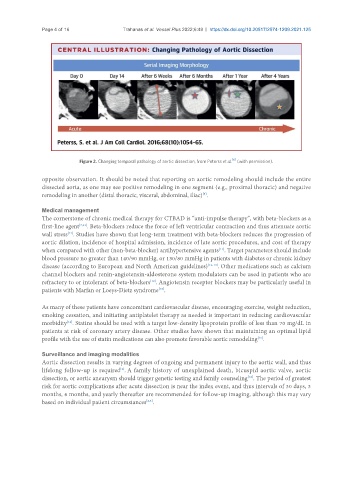
                            Figure 2. Changing temporal pathology of aortic dissection, from Peterss et al.  (with permission).

               opposite observation. It should be noted that reporting on aortic remodeling should include the entire
               dissected aorta, as one may see positive remodeling in one segment (e.g., proximal thoracic) and negative
                                                                     [3]
               remodeling in another (distal thoracic, visceral, abdominal, iliac) .

               Medical management
               The cornerstone of chronic medical therapy for CTBAD is “anti-impulse therapy”, with beta-blockers as a
               first-line agent [7,11] . Beta-blockers reduce the force of left ventricular contraction and thus attenuate aortic
                        [12]
               wall stress . Studies have shown that long-term treatment with beta-blockers reduces the progression of
               aortic dilation, incidence of hospital admission, incidence of late aortic procedures, and cost of therapy
                                                                           [11]
               when compared with other (non-beta-blocker) antihypertensive agents . Target parameters should include
               blood pressure no greater than 140/90 mmHg, or 130/80 mmHg in patients with diabetes or chronic kidney
               disease (according to European and North American guidelines) [12-14] . Other medications such as calcium
               channel blockers and renin-angiotensin-aldosterone system modulators can be used in patients who are
                                                    [12]
               refractory to or intolerant of beta-blockers . Angiotensin receptor blockers may be particularly useful in
                                                      [13]
               patients with Marfan or Loeys-Dietz syndrome .
               As many of these patients have concomitant cardiovascular disease, encouraging exercise, weight reduction,
               smoking cessation, and initiating antiplatelet therapy as needed is important in reducing cardiovascular
               morbidity . Statins should be used with a target low-density lipoprotein profile of less than 70 mg/dL in
                        [12]
               patients at risk of coronary artery disease. Other studies have shown that maintaining an optimal lipid
               profile with the use of statin medications can also promote favorable aortic remodeling .
                                                                                        [15]

               Surveillance and imaging modalities
               Aortic dissection results in varying degrees of ongoing and permanent injury to the aortic wall, and thus
               lifelong follow-up is required . A family history of unexplained death, bicuspid aortic valve, aortic
                                          [2]
                                                                                    [12]
               dissection, or aortic aneurysm should trigger genetic testing and family counseling . The period of greatest
               risk for aortic complications after acute dissection is near the index event, and thus intervals of 30 days, 3
               months, 6 months, and yearly thereafter are recommended for follow-up imaging, although this may vary
               based on individual patient circumstances .
                                                  [2,3]

