


Page 53 - Read Online
P. 53
Trahanas et al. Vessel Plus 2022;6:49  https://dx.doi.org/10.20517/2574-1209.2021.125  Page 13 of 16


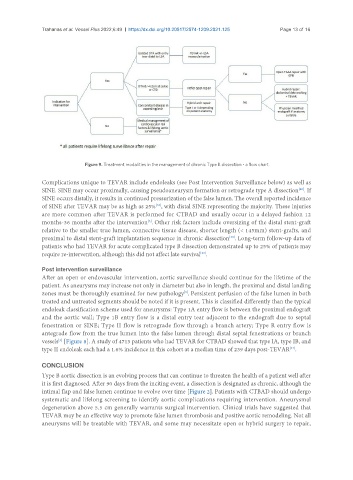
                              Figure 9. Treatment modalities in the management of chronic Type B dissection - a flow chart.


               Complications unique to TEVAR include endoleaks (see Post Intervention Surveillance below) as well as
                                                                                                      [48]
               SINE. SINE may occur proximally, causing pseudoaneurysm formation or retrograde type A dissection . If
               SINE occurs distally, it results in continued pressurization of the false lumen. The overall reported incidence
                                                     [28]
               of SINE after TEVAR may be as high as 25% , with distal SINE representing the majority. These injuries
               are more common after TEVAR is performed for CTBAD and usually occur in a delayed fashion 12
                                                   [3]
               months-36 months after the intervention . Other risk factors include oversizing of the distal stent-graft
               relative to the smaller true lumen, connective tissue disease, shorter length (< 145mm) stent-grafts, and
                                                                              [28]
               proximal to distal stent-graft implantation sequence in chronic dissection . Long-term follow-up data of
               patients who had TEVAR for acute complicated type B dissection demonstrated up to 25% of patients may
               require re-intervention, although this did not affect late survival .
                                                                     [23]
               Post intervention surveillance
               After an open or endovascular intervention, aortic surveillance should continue for the lifetime of the
               patient. As aneurysms may increase not only in diameter but also in length, the proximal and distal landing
               zones must be thoroughly examined for new pathology . Persistent perfusion of the false lumen in both
                                                               [9]
               treated and untreated segments should be noted if it is present. This is classified differently than the typical
               endoleak classification scheme used for aneurysms: Type 1A entry flow is between the proximal endograft
               and the aortic wall; Type 1B entry flow is a distal entry tear adjacent to the endograft due to septal
               fenestration or SINE; Type II flow is retrograde flow through a branch artery; Type R entry flow is
               antegrade flow from the true lumen into the false lumen through distal septal fenestrations or branch
               vessels  [Figure 8]. A study of 4713 patients who had TEVAR for CTBAD showed that type IA, type IB, and
                     [3]
               type II endoleak each had a 1.6% incidence in this cohort at a median time of 239 days post-TEVAR .
                                                                                                   [34]
               CONCLUSION
               Type B aortic dissection is an evolving process that can continue to threaten the health of a patient well after
               it is first diagnosed. After 90 days from the inciting event, a dissection is designated as chronic, although the
               intimal flap and false lumen continue to evolve over time [Figure 2]. Patients with CTBAD should undergo
               systematic and lifelong screening to identify aortic complications requiring intervention. Aneurysmal
               degeneration above 5.5 cm generally warrants surgical intervention. Clinical trials have suggested that
               TEVAR may be an effective way to promote false lumen thrombosis and positive aortic remodeling. Not all
               aneurysms will be treatable with TEVAR, and some may necessitate open or hybrid surgery to repair,

