


Page 98 - Read Online
P. 98
Page 8 of 26                                                        Chang et al. Soft Sci. 2026, 6, 29


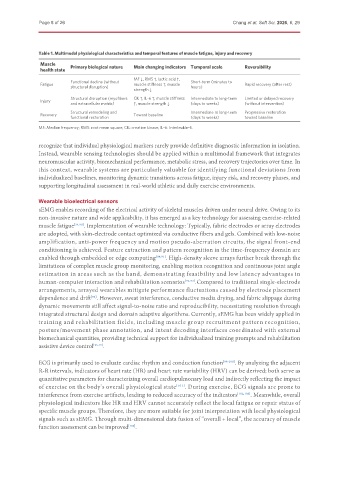
               Table 1. Multimodal physiological characteristics and temporal features of muscle fatigue, injury and recovery
               Muscle     Primary biological nature  Main changing indicators Temporal scale  Reversibility
               health state
                                                MF ↓, RMS ↑, lactic acid ↑,
                          Functional decline (without               Short-term (minutes to
               Fatigue                          muscle stiffness ↑, muscle             Rapid recovery (after rest)
                          structural disruption)                    hours)
                                                strength ↓
                          Structural disruption (myofibers  CK ↑, IL-6 ↑, muscle stiffness  Intermediate to long-term  Limited or delayed recovery
               Injury
                          and extracellular matrix)  ↑, muscle strength ↓  (days to weeks)  (without intervention)
                          Structural remodeling and                 Intermediate to long-term  Progressive restoration
               Recovery                         Toward baseline
                          functional restoration                    (days to weeks)    toward baseline
               MF: Median frequency; RMS: root mean square; CK: creatine kinase; IL-6: Interleukin-6.

               recognize that individual physiological markers rarely provide definitive diagnostic information in isolation.
               Instead, wearable sensing technologies should be applied within a multimodal framework that integrates
               neuromuscular activity, biomechanical performance, metabolic stress, and recovery trajectories over time. In
               this context, wearable systems are particularly valuable for identifying functional deviations from
               individualized baselines, monitoring dynamic transitions across fatigue, injury risk, and recovery phases, and
               supporting longitudinal assessment in real-world athletic and daily exercise environments.

               Wearable bioelectrical sensors
               sEMG enables recording of the electrical activity of skeletal muscles driven under neural drive. Owing to its
               non-invasive nature and wide applicability, it has emerged as a key technology for assessing exercise-related
               muscle fatigue [34,90] . Implementation of wearable technology: Typically, fabric electrodes or array electrodes
               are adopted, with skin-electrode contact optimized via conductive fibers and gels. Combined with low-noise
               amplification, anti-power frequency and motion pseudo-aberration circuits, the signal front-end
               conditioning is achieved. Feature extraction and pattern recognition in the time-frequency domain are
               enabled through embedded or edge computing [84,91] . High-density sleeve arrays further break through the
               limitations of complex muscle group monitoring, enabling motion recognition and continuous joint angle
               estimation in areas such as the hand, demonstrating feasibility and low latency advantages in
               human-computer interaction and rehabilitation scenarios [92,93] .Compared to traditional single-electrode
               arrangements, arrayed wearables mitigate performance fluctuations caused by electrode placement
               dependence and drift . However, sweat interference, conductive media drying, and fabric slippage during
                                 [94]
               dynamic movements still affect signal-to-noise ratio and reproducibility, necessitating resolution through
               integrated structural design and domain adaptive algorithms. Currently, sEMG has been widely applied in
               training and rehabilitation fields, including muscle group recruitment pattern recognition,
               posture/movement phase annotation, and intent decoding interfaces coordinated with external
               biomechanical quantities, providing technical support for individualized training prompts and rehabilitation
               assistive device control [95-97] .

               ECG is primarily used to evaluate cardiac rhythm and conduction function [98-100] . By analyzing the adjacent
               R-R intervals, indicators of heart rate (HR) and heart rate variability (HRV) can be derived; both serve as
               quantitative parameters for characterizing overall cardiopulmonary load and indirectly reflecting the impact
               of exercise on the body’s overall physiological state [101] . During exercise, ECG signals are prone to
               interference from exercise artifacts, leading to reduced accuracy of the indicators [102,103] . Meanwhile, overall
               physiological indicators like HR and HRV cannot accurately reflect the local fatigue or repair status of
               specific muscle groups. Therefore, they are more suitable for joint interpretation with local physiological
               signals such as sEMG. Through multi-dimensional data fusion of “overall + local”, the accuracy of muscle
               function assessment can be improved .
                                              [104]

