


Page 69 - Read Online
P. 69
Chen et al. Soft Sci. 2026, 6, 9                                                  Page 7 of 36


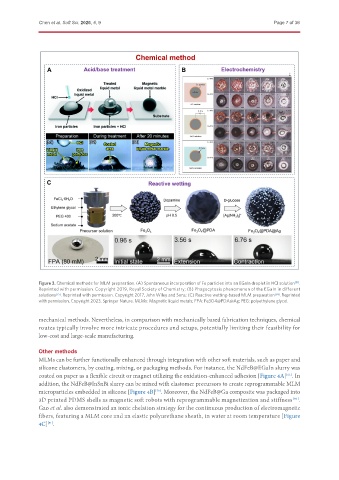
               Figure 3. Chemical methods for MLM preparation. (A) Spontaneous incorporation of Fe particles into an EGaIn droplet in HCl solution .
                                                                                                         [51]
               Reprinted with permission. Copyright 2019, Royal Society of Chemistry; (B) Phagocytosis phenomenon of the EGaIn in different
               solutions [75] . Reprinted with permission. Copyright 2017, John Wiley and Sons; (C) Reactive wetting-based MLM preparation [54] . Reprinted
               with permission. Copyright 2023, Springer Nature. MLMs: Magnetic liquid metals; FPA: Fe3O4@PDA@Ag; PEG: polyethylene glycol.

               mechanical methods. Nevertheless, in comparison with mechanically based fabrication techniques, chemical
               routes typically involve more intricate procedures and setups, potentially limiting their feasibility for
               low-cost and large-scale manufacturing.


               Other methods
               MLMs can be further functionally enhanced through integration with other soft materials, such as paper and
               silicone elastomers, by coating, mixing, or packaging methods. For instance, the NdFeB@EGaIn slurry was
               coated on paper as a flexible circuit or magnet utilizing the oxidation-enhanced adhesion [Figure 4A] . In
                                                                                                      [61]
               addition, the NdFeB@InSnBi slurry can be mixed with elastomer precursors to create reprogrammable MLM
               microparticles embedded in silicone [Figure 4B] . Moreover, the NdFeB@Ga composite was packaged into
                                                        [79]
               3D printed PDMS shells as magnetic soft robots with reprogrammable magnetization and stiffness .
                                                                                                        [80]
               Gao et al. also demonstrated an ionic chelation strategy for the continuous production of electromagnetic
               fibers, featuring a MLM core and an elastic polyurethane sheath, in water at room temperature [Figure
               4C] .
                  [81]

