


Page 131 - Read Online
P. 131
Chen et al. Soft Sci. 2026, 6, 48                                                 Page 9 of 19


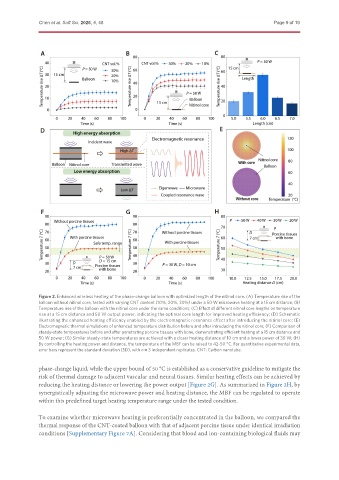
               Figure 2. Enhanced wireless heating of the phase-change balloon with optimized length of the nitinol core. (A) Temperature rise of the
               balloon without nitinol core, tested with varying CNT content (10%, 20%, 30%) under a 50 W microwave heating at a 15 cm distance; (B)
               Temperature rise of the balloon with the nitinol core under the same conditions; (C) Effect of different nitinol core lengths on temperature
               rise at a 15 cm distance and 50 W output power, indicating the optimal core length for improved heating efficiency; (D) Schematic
               illustrating the enhanced heating efficiency enabled by the electromagnetic resonance effect after introducing the nitinol core; (E)
               Electromagnetic thermal simulations of enhanced temperature distribution before and after introducing the nitinol core; (F) Comparison of
               steady-state temperatures before and after penetrating porcine tissues with bone, demonstrating efficient heating at a 15 cm distance and
               50 W power; (G) Similar steady-state temperatures are achieved with a closer heating distance of 10 cm and a lower power of 30 W; (H)
               By controlling the heating power and distance, the temperature of the MBF can be raised to 42-50 °C. For quantitative experimental data,
               error bars represent the standard deviation (SD), with n = 3 independent replicates. CNT: Carbon nanotube.


               phase-change liquid, while the upper bound of 50 °C is established as a conservative guideline to mitigate the
               risk of thermal damage to adjacent vascular and neural tissues. Similar heating effects can be achieved by
               reducing the heating distance or lowering the power output [Figure 2G]. As summarized in Figure 2H, by
               synergistically adjusting the microwave power and heating distance, the MBF can be regulated to operate
               within this predefined target heating temperature range under the tested condition.

               To examine whether microwave heating is preferentially concentrated in the balloon, we compared the
               thermal response of the CNT-coated balloon with that of adjacent porcine tissue under identical irradiation
               conditions [Supplementary Figure 7A]. Considering that blood and ion-containing biological fluids may

