


Page 56 - Read Online
P. 56
Yan et al. Soft Sci. 2025, 5, 8  https://dx.doi.org/10.20517/ss.2024.66          Page 5 of 34

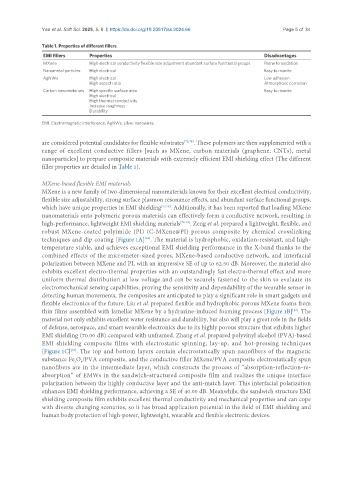
               Table 1. Properties of different fillers
                EMI fillers    Properties                                                 Disadvantages
                MXene          High electrical conductivity flexible size adjustment abundant surface functional groups  Prone to oxidation
                Nanometal particles  High electrical                                      Easy to reunite
                AgNWs          High electrical                                            Low adhesion
                               High aspect ratio                                          Atmospheric corrosion
                Carbon nanomaterials  High specific surface area                          Easy to reunite
                               High electrical
                               High thermal conductivity
                               Increase roughness
                               Durability

               EMI: Electromagnetic interference; AgNWs: silver nanowires.

               are considered potential candidates for flexible substrates [75,76] . These polymers are then supplemented with a
               range of excellent conductive fillers [such as MXene, carbon materials (graphene, CNTs), metal
               nanoparticles] to prepare composite materials with extremely efficient EMI shielding effect (The different
               filler properties are detailed in Table 1).


               MXene-based flexible EMI materials
               MXene is a new family of two-dimensional nanomaterials known for their excellent electrical conductivity,
               flexible size adjustability, strong surface plasmon resonance effects, and abundant surface functional groups,
               which have unique properties in EMI shielding [77,78] . Additionally, it has been reported that loading MXene
               nanomaterials onto polymeric porous materials can effectively form a conductive network, resulting in
               high-performance, lightweight EMI shielding materials [79-81] . Zeng et al. prepared a lightweight, flexible, and
               robust MXene-coated polyimide (PI) (C-MXene@PI) porous composite by chemical crosslinking
                                                  [82]
               techniques and dip coating [Figure 1A] . The material is hydrophobic, oxidation-resistant, and high-
               temperature stable, and achieves exceptional EMI shielding performance in the X-band thanks to the
               combined effects of the micrometer-sized pores, MXene-based conductive network, and interfacial
               polarization between MXene and PI, with an impressive SE of up to 62.50 dB. Moreover, the material also
               exhibits excellent electro-thermal properties with an outstandingly fast electro-thermal effect and more
               uniform thermal distribution at low voltage and can be securely fastened to the skin to evaluate its
               electromechanical sensing capabilities, proving the sensitivity and dependability of the wearable sensor in
               detecting human movements, the composites are anticipated to play a significant role in smart gadgets and
               flexible electronics of the future. Liu et al. prepared flexible and hydrophobic porous MXene foams from
                                                                                                    [83]
               thin films assembled with lamellar MXene by a hydrazine-induced foaming process [Figure 1B] . The
               material not only exhibits excellent water resistance and durability, but also will play a great role in the fields
               of defense, aerospace, and smart wearable electronics due to its highly porous structure that exhibits higher
               EMI shielding (70.00 dB) compared with unframed. Zhang et al. prepared polyvinyl alcohol (PVA)-based
               EMI shielding composite films with electrostatic spinning, lay-up, and hot-pressing techniques
                         [84]
               [Figure 1C] . The top and bottom layers contain electrostatically spun nanofibers of the magnetic
               substance Fe O /PVA composite, and the conductive filler MXene/PVA composite electrostatically spun
                            4
                          3
               nanofibers are in the intermediate layer, which constructs the process of “absorption-reflection-re-
               absorption” of EMWs in the sandwich-structured composite film and realizes the unique interface
               polarization between the highly conductive layer and the anti-match layer. This interfacial polarization
               enhances EMI shielding performance, achieving a SE of 40.00 dB. Meanwhile, the sandwich structure EMI
               shielding composite film exhibits excellent thermal conductivity and mechanical properties and can cope
               with diverse changing scenarios, so it has broad application potential in the field of EMI shielding and
               human body protection of high-power, lightweight, wearable and flexible electronic devices.

