


Page 54 - Read Online
P. 54
Yan et al. Soft Sci. 2025, 5, 8  https://dx.doi.org/10.20517/ss.2024.66          Page 3 of 34


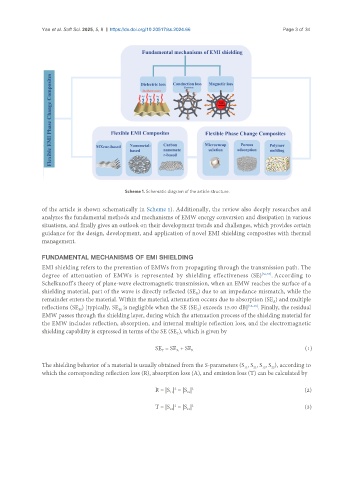
                                           Scheme 1. Schematic diagram of the article structure.

               of the article is shown schematically in Scheme 1). Additionally, the review also deeply researches and
               analyzes the fundamental methods and mechanisms of EMW energy conversion and dissipation in various
               situations, and finally gives an outlook on their development trends and challenges, which provides certain
               guidance for the design, development, and application of novel EMI shielding composites with thermal
               management.


               FUNDAMENTAL MECHANISMS OF EMI SHIELDING
               EMI shielding refers to the prevention of EMWs from propagating through the transmission path. The
               degree  of  attenuation  of  EMWs  is  represented  by  shielding  effectiveness  (SE) [56,57] . According  to
               Schelkunoff’s theory of plane-wave electromagnetic transmission, when an EMW reaches the surface of a
               shielding material, part of the wave is directly reflected (SE ) due to an impedance mismatch, while the
                                                                   R
               remainder enters the material. Within the material, attenuation occurs due to absorption (SE ) and multiple
                                                                                             A
               reflections (SE ) [typically, SE  is negligible when the SE (SE ) exceeds 15.00 dB] [58-60] . Finally, the residual
                            M
                                         M
                                                                   T
               EMW passes through the shielding layer, during which the attenuation process of the shielding material for
               the EMW includes reflection, absorption, and internal multiple reflection loss, and the electromagnetic
               shielding capability is expressed in terms of the SE (SE ), which is given by
                                                             T
                                                     SE  = SE  + SE                                                                             (1)
                                                                  R
                                                             A
                                                        T
               The shielding behavior of a material is usually obtained from the S-parameters (S , S , S , S ), according to
                                                                                   11
                                                                                         12
                                                                                      21
                                                                                             22
               which the corresponding reflection loss (R), absorption loss (A), and emission loss (T) can be calculated by
                                                     R = |S |  = |S | 2                                   (2)
                                                            2
                                                          11
                                                                22
                                                     T = |S |  = |S | 2                                   (3)
                                                            2
                                                                21
                                                          12

