


Page 111 - Read Online
P. 111
Page 10 of 25                           Hao et al. Soft Sci. 2025, 5, 39  https://dx.doi.org/10.20517/ss.2025.48


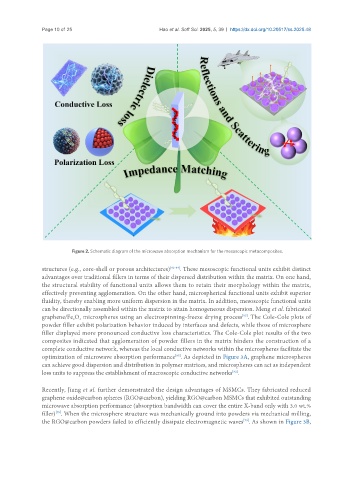
                         Figure 2. Schematic diagram of the microwave absorption mechanism for the mesoscopic metacomposites.


               structures (e.g., core-shell or porous architectures) [92-94] . These mesoscopic functional units exhibit distinct
               advantages over traditional fillers in terms of their dispersed distribution within the matrix. On one hand,
               the structural stability of functional units allows them to retain their morphology within the matrix,
               effectively preventing agglomeration. On the other hand, microspherical functional units exhibit superior
               fluidity, thereby enabling more uniform dispersion in the matrix. In addition, mesoscopic functional units
               can be directionally assembled within the matrix to attain homogeneous dispersion. Meng et al. fabricated
                                                                                   [95]
               graphene/Fe O  microspheres using an electrospinning-freeze drying process . The Cole-Cole plots of
                            4
                          3
               powder filler exhibit polarization behavior induced by interfaces and defects, while those of microsphere
               filler displayed more pronounced conductive loss characteristics. The Cole-Cole plot results of the two
               composites indicated that agglomeration of powder fillers in the matrix hinders the construction of a
               complete conductive network, whereas the local conductive networks within the microspheres facilitate the
               optimization of microwave absorption performance . As depicted in Figure 3A, graphene microspheres
                                                            [95]
               can achieve good dispersion and distribution in polymer matrices, and microspheres can act as independent
               loss units to suppress the establishment of macroscopic conductive networks .
                                                                               [92]
               Recently, Jiang et al. further demonstrated the design advantages of MSMCs. They fabricated reduced
               graphene oxide@carbon spheres (RGO@carbon), yielding RGO@carbon MSMCs that exhibited outstanding
               microwave absorption performance (absorption bandwidth can cover the entire X-band only with 3.0 wt.%
               filler) . When the microsphere structure was mechanically ground into powders via mechanical milling,
                    [79]
               the RGO@carbon powders failed to efficiently dissipate electromagnetic waves . As shown in Figure 3B,
                                                                                   [79]

