


Page 86 - Read Online
P. 86
Page 8 of 15                            Duan et al. Soft Sci. 2025, 5, 4  https://dx.doi.org/10.20517/ss.2024.46


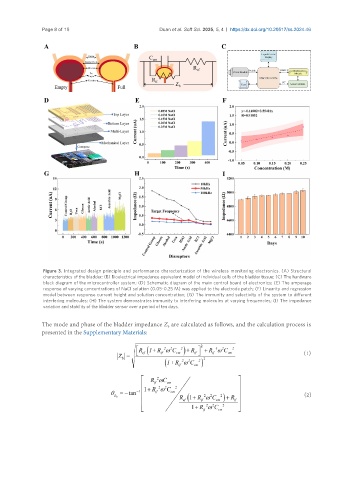
                Figure 3. Integrated design principle and performance characterization of the wireless monitoring electronics. (A) Structural
                characteristics of the bladder; (B) Bioelectrical impedance equivalent model of individual cells of the bladder tissue; (C) The hardware
                block diagram of the microcontroller system; (D) Schematic diagram of the main control board of electronics; (E) The amperage
                response of varying concentrations of NaCl solution (0.05-0.25 M) was applied to the electrode patch; (F) Linearity and regression
                model between response current height and solution concentration; (G) The immunity and selectivity of the system to different
                interfering molecules; (H) The system demonstrates immunity to interfering molecules at varying frequencies; (I) The impedance
                variation and stability of the bladder sensor over a period of ten days.


               The mode and phase of the bladder impedance Z  are calculated as follows, and the calculation process is
                                                          b
               presented in the Supplementary Materials:


                                                                                                       (1)


                                                                                                        (2)

