


Page 84 - Read Online
P. 84
Page 6 of 15                            Duan et al. Soft Sci. 2025, 5, 4  https://dx.doi.org/10.20517/ss.2024.46


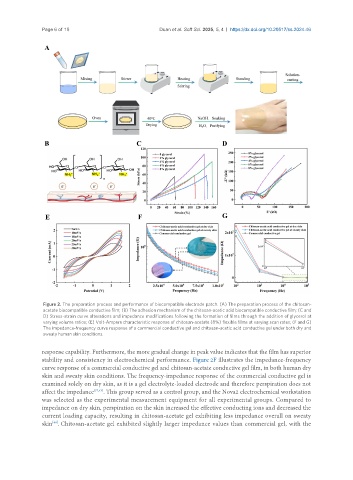
                Figure 2. The preparation process and performance of biocompatible electrode patch. (A) The preparation process of the chitosan-
                acetate biocompatible conductive film; (B) The adhesion mechanism of the chitosan-acetic acid biocompatible conductive film; (C and
                D) Stress-strain curve alterations and impedance modifications following the formation of films through the addition of glycerol at
                varying volume ratios; (E) Volt-Ampere characteristic response of chitosan-acetate (8%) flexible films at varying scan rates; (F and G)
                The impedance-frequency curve response of a commercial conductive gel and chitosan-acetic acid conductive gel under both dry and
                sweaty human skin conditions.

               response capability. Furthermore, the more gradual change in peak value indicates that the film has superior
               stability and consistency in electrochemical performance. Figure 2F illustrates the impedance-frequency
               curve response of a commercial conductive gel and chitosan-acetate conductive gel film, in both human dry
               skin and sweaty skin conditions. The frequency-impedance response of the commercial conductive gel is
               examined solely on dry skin, as it is a gel electrolyte-loaded electrode and therefore perspiration does not
               affect the impedance [37,43] . This group served as a control group, and the Nova2 electrochemical workstation
               was selected as the experimental measurement equipment for all experimental groups. Compared to
               impedance on dry skin, perspiration on the skin increased the effective conducting ions and decreased the
               current loading capacity, resulting in chitosan-acetate gel exhibiting less impedance overall on sweaty
                   [44]
               skin . Chitosan-acetate gel exhibited slightly larger impedance values than commercial gel, with the

