


Page 115 - Read Online
P. 115
Yin et al. Soft Sci. 2025, 5, 30  https://dx.doi.org/10.20517/ss.2025.15         Page 3 of 9


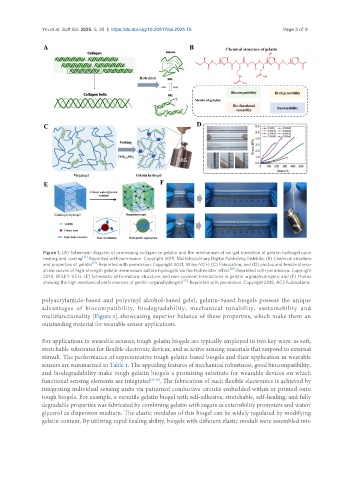
                Figure 1. (A) Schematic diagram of processing collagen to gelatin and the mechanism of sol-gel transition of gelatin hydrogel upon
                heating and cooling [12] . Reprinted with permission. Copyright 2019, Multidisciplinary Digital Publishing Institute; (B) Chemical structure
                and properties of gelatin [13] . Reprinted with permission. Copyright 2021, Wiley-VCH; (C) Fabrication; and (D) photos and tensile stress-
                strain curves of high-strength gelatin-ammonium sulfate hydrogels via the Hofmeister  effect [19] . Reprinted with permission. Copyright
                2018, WILEY-VCH; (E) Schematic of formation, structure, and non-covalent interactions in gelatin organohydrogels; and (F) Photos
                showing the high mechanical performances of gelatin organohydrogels [22] . Reprinted with permission. Copyright 2019, ACS Publications.

               polyacrylamide-based and polyvinyl alcohol-based gels), gelatin-based biogels possess the unique
               advantages  of  biocompatibility,  biodegradability,  mechanical  tunability,  sustainability  and
               multifunctionality [Figure 2], showcasing superior balance of these properties, which make them an
               outstanding material for wearable sensor applications.


               For applications in wearable sensors, tough gelatin biogels are typically employed in two key ways: as soft,
               stretchable substrates for flexible electronic devices, and as active sensing materials that respond to external
               stimuli. The performance of representative tough gelatin-based biogels and their application in wearable
               sensors are summarized in Table 1. The appealing features of mechanical robustness, good biocompatibility,
               and biodegradability make tough gelatin biogels a promising substrate for wearable devices on which
               functional sensing elements are integrated [28-30] . The fabrication of such flexible electronics is achieved by
               integrating individual sensing units via patterned conductive circuits embedded within or printed onto
               tough biogels. For example, a versatile gelatin biogel with self-adhesive, stretchable, self-healing, and fully
               degradable properties was fabricated by combining gelatin with sugars as extensibility promoters and water/
               glycerol as dispersion medium. The elastic modulus of this biogel can be widely regulated by modifying
               gelatin content. By utilizing rapid healing ability, biogels with different elastic moduli were assembled into

