


Page 117 - Read Online
P. 117
Yin et al. Soft Sci. 2025, 5, 30  https://dx.doi.org/10.20517/ss.2025.15         Page 5 of 9


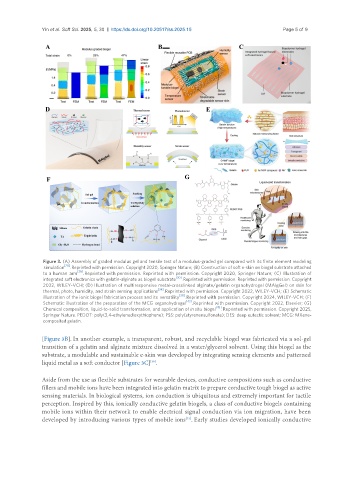
                Figure 3. (A) Assembly of graded modulus gel and tensile test of a modulus-graded gel compared with its finite element modeling
                simulation [28] . Reprinted with permission. Copyright 2020, Springer Nature; (B) Construction of soft e-skin on biogel substrate attached
                to a human  arm [28] . Reprinted with permission. Reprinted with permission. Copyright 2020, Springer Nature; (C) Illustration of
                integrated soft electronics with gelatin-alginate as biogel substrate [30] . Reprinted with permission. Reprinted with permission. Copyright
                2022, WILEY-VCH; (D) Illustration of multiresponsive metal-crosslinked alginate/gelatin organohydrogel (MAlgGel) on skin for
                thermal, photo, humidity, and strain sensing  applications [34] . Reprinted with permission. Copyright 2022, WILEY-VCH; (E) Schematic
                illustration of the ionic biogel fabrication process and its  versatility [38] . Reprinted with permission. Copyright 2024, WILEY-VCH; (F)
                Schematic illustration of the preparation of the MCG  organohydrogel [43] . Reprinted with permission. Copyright 2022, Elsevier; (G)
                Chemical composition, liquid-to-solid transformation, and application of in situ  biogel [45] . Reprinted with permission. Copyright 2025,
                Springer Nature. PEDOT: poly(3,4-ethylenedioxythiophene); PSS: poly(styrenensulfonate); DES: deep eutectic solvent; MCG: MXene-
                composited gelatin.

               [Figure 3B]. In another example, a transparent, robust, and recyclable biogel was fabricated via a sol-gel
               transition of a gelatin and alginate mixture dissolved in a water/glycerol solvent. Using this biogel as the
               substrate, a modulable and sustainable e-skin was developed by integrating sensing elements and patterned
                                                    [30]
               liquid metal as a soft conductor [Figure 3C] .
               Aside from the use as flexible substrates for wearable devices, conductive compositions such as conductive
               fillers and mobile ions have been integrated into gelatin matrix to prepare conductive tough biogel as active
               sensing materials. In biological systems, ion conduction is ubiquitous and extremely important for tactile
               perception. Inspired by this, ionically conductive gelatin biogels, a class of conductive biogels containing
               mobile ions within their network to enable electrical signal conduction via ion migration, have been
                                                                [31]
               developed by introducing various types of mobile ions . Early studies developed ionically conductive

