


Page 53 - Read Online
P. 53
Zhao et al. Soft Sci. 2026, 6, 4                                                  Page 5 of 15


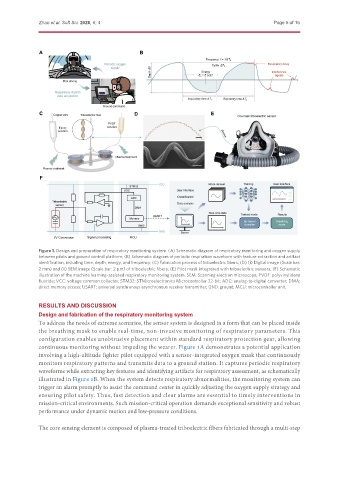
               Figure 1. Design and preparation of respiratory monitoring system. (A) Schematic diagram of respiratory monitoring and oxygen supply
               between pilots and ground control platform; (B) Schematic diagram of periodic respiration waveform with feature extraction and artifact
               identification, including time, depth, energy, and frequency; (C) Fabrication process of triboelectric fibers; (D) (ⅰ) Digital image (Scale bar:
               2 mm) and (ⅱ) SEM image (Scale bar: 2 μm) of triboelectric fibers; (E) Pilot mask integrated with triboelectric sensors; (F) Schematic
               illustration of the machine learning-assisted respiratory monitoring system. SEM: Scanning electron microscope; PVDF: polyvinylidene
               fluoride; VCC: voltage common collector; STM32: STMicroelectronics Microcontroller 32-bit; ADC: analog-to-digital converter; DMA:
               direct memory access; USART: universal synchronous asynchronous receiver transmitter; GND: ground; MCU: microcontroller unit.


               RESULTS AND DISCUSSION
               Design and fabrication of the respiratory monitoring system
               To address the needs of extreme scenarios, the sensor system is designed in a form that can be placed inside
               the breathing mask to enable real-time, non-invasive monitoring of respiratory parameters. This
               configuration enables unobtrusive placement within standard respiratory protection gear, allowing
               continuous monitoring without impeding the wearer. Figure 1A demonstrates a potential application
               involving a high-altitude fighter pilot equipped with a sensor-integrated oxygen mask that continuously
               monitors respiratory patterns and transmits data to a ground station. It captures periodic respiratory
               waveforms while extracting key features and identifying artifacts for respiratory assessment, as schematically
               illustrated in Figure 1B. When the system detects respiratory abnormalities, the monitoring system can
               trigger an alarm promptly to assist the command center in quickly adjusting the oxygen supply strategy and
               ensuring pilot safety. Thus, fast detection and clear alarms are essential to timely interventions in
               mission-critical environments. Such mission-critical operation demands exceptional sensitivity and robust
               performance under dynamic motion and low-pressure conditions.


               The core sensing element is composed of plasma-treated triboelectric fibers fabricated through a multi-step

