


Page 135 - Read Online
P. 135
Zheng et al. Soft Sci. 2026, 6, 32                                               Page 25 of 57


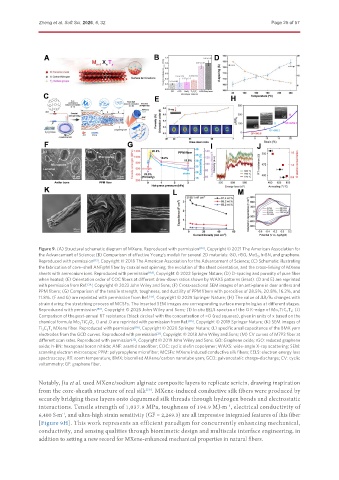
               Figure 9. (A) Structural schematic diagram of MXene. Reproduced with permission [112] , Copyright © 2021 The American Association for
               the Advancement of Science; (B) Comparison of effective Young’s moduli for several 2D materials: GO, rGO, MoS 2 , h-BN, and graphene.
               Reproduced with permission [113] , Copyright © 2018 The American Association for the Advancement of Science; (C) Schematic illustrating
               the fabrication of core–shell ANF@M fiber by coaxial wet spinning, the evolution of the sheet orientation, and the cross-linking of MXene
               sheets with ammonium ions. Reproduced with permission [114] , Copyright © 2022 Springer Nature; (D) D-spacing and porosity of pure fiber
               when heated; (E) Orientation order of COC fibers at different draw-down ratios shown by WAXS patterns (inset). (D and E) are reprinted
               with permission from Ref. [34] , Copyright © 2023 John Wiley and Sons; (F) Cross-sectional SEM images of an anti-plane in deer antlers and
               PPM fibers; (G) Comparison of the tensile strength, toughness, and ductility of PPM fibers with porosities of 28.5%, 20.8%, 16.2%, and
               11.8%. (F and G) are reprinted with permission from Ref. [35] , Copyright © 2025 Springer Nature; (H) The value of ΔR/R0 changes with
               strain during the stretching process of MCSFs. The inserted SEM images are corresponding surface morphologies at different stages.
               Reproduced with permission [58] , Copyright © 2025 John Wiley and Sons; (I) In situ EELS spectra of the O K-edge of Mo 2 TiC 2 T x ; (J)
               Comparison of the post-anneal RT resistance (black circles) with the concentration of =O (red squares), given in units of x based on the
               chemical formula Mo 2 TiC 2 O x . (I and J) are reprinted with permission from Ref. [115] , Copyright © 2019 Springer Nature; (K) SEM images of
               Ti 3 C 2 T x  MXene fiber. Reproduced with permission [116] , Copyright © 2020 Springer Nature; (L) specific areal capacitance of the BMX yarn
               electrodes from the GCD curves. Reproduced with permission , Copyright © 2018 John Wiley and Sons; (M) CV curves of M7P3 fiber at
                                                        [31]
               different scan rates. Reproduced with permission [32] , Copyright © 2019 John Wiley and Sons. GO: Graphene oxide; rGO: reduced graphene
               oxide; h-BN: hexagonal boron nitride; ANF: aramid nanofiber; COC: cyclic olefin copolymer; WAXS: wide-angle X-ray scattering; SEM:
               scanning electron microscope; PPM: polypropylene microfiber; MCSFs: MXene induced conductive silk fibers; EELS: electron energy loss
               spectroscopy; RT: room temperature; BMX: biscrolled MXene/carbon nanotube yarn; GCD: galvanostatic charge-discharge; CV: cyclic
               voltammetry; GF: graphene fiber.


               Notably, Jia et al. used MXene/sodium alginate composite layers to replicate sericin, drawing inspiration
               from the core-sheath structure of real silk . MXene-induced conductive silk fibers were produced by
                                                    [58]
               securely bridging these layers onto degummed silk threads through hydrogen bonds and electrostatic
               interactions. Tensile strength of 1,037.9 MPa, toughness of 194.9 MJ·m , electrical conductivity of
                                                                                 -3
               6,400 S·m , and ultra-high strain sensitivity (GF = 2,269.3) are all impressive integrated features of this fiber
                       -1
               [Figure 9H]. This work represents an efficient paradigm for concurrently enhancing mechanical,
               conductivity, and sensing qualities through biomimetic design and multiscale interface engineering, in
               addition to setting a new record for MXene-enhanced mechanical properties in natural fibers.

