


Page 45 - Read Online
P. 45
Wang et al. Soft Sci 2024;4:41  https://dx.doi.org/10.20517/ss.2024.53          Page 27 of 43


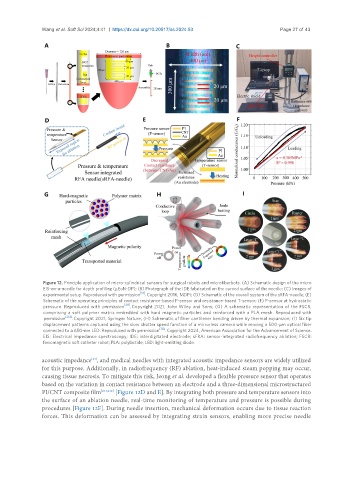
                Figure 12. Principle application of micro-cylindrical sensors for surgical robots and microfiberbots. (A) Schematic design of the micro
                EIS-on-a-needle for depth profiling (µEoN-DP); (B) Photograph of the IDE fabricated on the curved surface of the needle; (C) Images of
                experimental setup. Reproduced with permission [51] . Copyright 2016, MDPI; (D) Schematic of the overall system of the sRFA-needle; (E)
                Schematic of the operating principles of contact resistance-based P-sensor and resistance-based T-sensor; (F) P-sensor at hydrostatic
                pressure. Reproduced with  permission [211] . Copyright 2021, John Wiley and Sons; (G) A schematic representation of the FSCR,
                comprising a soft polymer matrix embedded with hard magnetic particles and reinforced with a PLA mesh. Reproduced with
                permission [214] . Copyright 2021, Springer Nature; (H) Schematic of fiber cantilever bending driven by thermal expansion; (I) Six tip
                displacement patterns captured using the slow shutter speed function of a mirrorless camera while moving a 500-μm optical fiber
                connected to a 650-nm LED. Reproduced with permission [112] . Copyright 2024, American Association for the Advancement of Science.
                EIS: Electrical impedance spectroscopy; IDE: interdigitated electrode; sFRA: sensor-integrated radiofrequency ablation; FSCR:
                ferromagnetic soft catheter robot; PLA: polylactide; LED: light-emitting diode.

                                [24]
               acoustic impedance , and medical needles with integrated acoustic impedance sensors are widely utilized
               for this purpose. Additionally, in radiofrequency (RF) ablation, heat-induced steam popping may occur,
               causing tissue necrosis. To mitigate this risk, Jeong et al. developed a flexible pressure sensor that operates
               based on the variation in contact resistance between an electrode and a three-dimensional microstructured
               PI/CNT composite film [211,212]  [Figure 12D and E]. By integrating both pressure and temperature sensors into
               the surface of an ablation needle, real-time monitoring of temperature and pressure is possible during
               procedures [Figure 12F]. During needle insertion, mechanical deformation occurs due to tissue reaction
               forces. This deformation can be assessed by integrating strain sensors, enabling more precise needle

