


Page 16 - Read Online
P. 16
Page 4 of 14                              Jo et al. Soft Sci 2024;4:27  https://dx.doi.org/10.20517/ss.2024.19


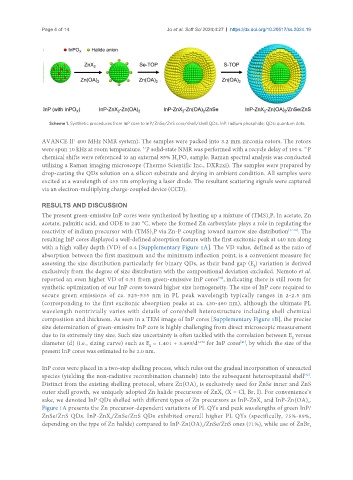
                  Scheme 1. Synthetic procedures from InP core to InP/ZnSe/ZnS core/shell/shell QDs. InP: Indium phosphide; QDs: quantum dots.

               AVANCE II  400 MHz NMR system). The samples were packed into 3.2 mm zirconia rotors. The rotors
                          +
               were spun 10 kHz at room temperature.  P solid-state NMR was performed with a recycle delay of 100 s.  P
                                                                                                        31
                                                 31
               chemical shifts were referenced to an external 85% H PO  sample. Raman spectral analysis was conducted
                                                                4
                                                             3
               utilizing a Raman imaging microscope (Thermo Scientific Inc., DXR2xi). The samples were prepared by
               drop-casting the QDs solution on a silicon substrate and drying in ambient condition. All samples were
               excited at a wavelength of 455 nm employing a laser diode. The resultant scattering signals were captured
               via an electron-multiplying charge-coupled device (CCD).

               RESULTS AND DISCUSSION
               The present green-emissive InP cores were synthesized by heating up a mixture of (TMS) P, In acetate, Zn
                                                                                           3
               acetate, palmitic acid, and ODE to 240 °C, where the formed Zn carboxylate plays a role in regulating the
               reactivity of indium precursor with (TMS) P via Zn-P coupling toward narrow size distribution [37-39] . The
                                                    3
               resulting InP cores displayed a well-defined absorption feature with the first excitonic peak at 440 nm along
               with a high valley depth (VD) of 0.4 [Supplementary Figure 1A]. The VD value, defined as the ratio of
               absorption between the first maximum and the minimum inflection point, is a convenient measure for
               assessing the size distribution particularly for binary QDs, as their band gap (E ) variation is derived
                                                                                       g
               exclusively from the degree of size distribution with the compositional deviation excluded. Nemoto et al.
               reported an even higher VD of 0.51 from green-emissive InP cores , indicating there is still room for
                                                                           [40]
               synthetic optimization of our InP cores toward higher size homogeneity. The size of InP core required to
               secure green  emissions  of  ca.  525-535  nm  in  PL  peak  wavelength  typically  ranges  in  2-2.5  nm
               (corresponding to the first excitonic absorption peaks at ca. 430-460 nm), although the ultimate PL
               wavelength nontrivially varies with details of core/shell heterostructure including shell chemical
               composition and thickness. As seen in a TEM image of InP cores [Supplementary Figure 1B], the precise
               size determination of green-emissive InP core is highly challenging from direct microscopic measurement
               due to its extremely tiny size. Such size uncertainty is often tackled with the correlation between E  versus
                                                                                                   g
                                                                                  [41]
               diameter (d) (i.e., sizing curve) such as E  = 1.401 + 3.493/d  for InP cores , by which the size of the
                                                                    1.172
                                                   g
               present InP cores was estimated to be 2.0 nm.
               InP cores were placed in a two-step shelling process, which rules out the gradual incorporation of unreacted
               species (yielding the non-radiative recombination channels) into the subsequent heteroepitaxial shell .
                                                                                                        [42]
               Distinct from the existing shelling protocol, where Zn(OA)  is exclusively used for ZnSe inner and ZnS
                                                                   2
               outer shell growth, we uniquely adopted Zn halide precursors of ZnX  (X = Cl, Br, I). For convenience’s
                                                                            2
               sake, we denoted InP QDs shelled with different types of Zn precursors as InP-ZnX  and InP-Zn(OA) .
                                                                                                         2
                                                                                         2
               Figure 1A presents the Zn precursor-dependent variations of PL QYs and peak wavelengths of green InP/
               ZnSe/ZnS QDs. InP-ZnX /ZnSe/ZnS QDs exhibited overall higher PL QYs (specifically, 75%-89%,
                                      2
               depending on the type of Zn halide) compared to InP-Zn(OA) /ZnSe/ZnS ones (71%), while use of ZnBr 2
                                                                     2

