


Page 45 - Read Online
P. 45
Page 22 of 34                             Ma et al. Soft Sci 2024;4:26  https://dx.doi.org/10.20517/ss.2024.20


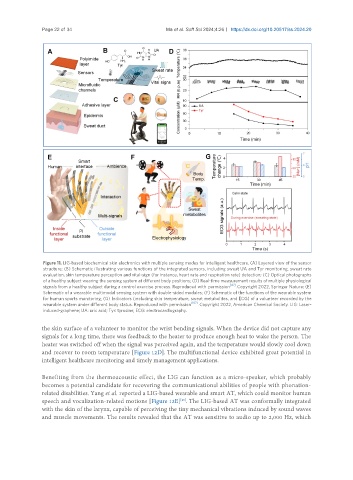
                Figure 11. LIG-based biochemical skin electronics with multiple sensing modes for intelligent healthcare. (A) Layered view of the sensor
                structure; (B) Schematic illustrating various functions of the integrated sensors, including sweat UA and Tyr monitoring, sweat rate
                evaluation, skin temperature perception and vital-sign (for instance, heart rate and respiration rate) detection; (C) Optical photographs
                of a healthy subject wearing the sensing system at different body positions; (D) Real-time measurement results of multiple physiological
                signals from a healthy subject during a control exercise process. Reproduced with permission [42] . Copyright 2022, Springer Nature; (E)
                Schematic of a wearable multimodal sensing system with double-sided modules; (F) Schematic of the functions of the wearable system
                for human sports monitoring; (G) Indicators (including skin temperature, sweat metabolites, and ECG) of a volunteer recorded by the
                wearable system under different body status. Reproduced with permission [107] . Copyright 2022, American Chemical Society. LIG: Laser-
                induced-graphene; UA: uric acid; Tyr: tyrosine; ECG: electrocardiography.

               the skin surface of a volunteer to monitor the wrist bending signals. When the device did not capture any
               signals for a long time, there was feedback to the heater to produce enough heat to wake the person. The
               heater was switched off when the signal was perceived again, and the temperature would slowly cool down
               and recover to room temperature [Figure 12D]. The multifunctional device exhibited great potential in
               intelligent healthcare monitoring and timely management applications.

               Benefiting from the thermoacoustic effect, the LIG can function as a micro-speaker, which probably
               becomes a potential candidate for recovering the communicational abilities of people with phonation-
               related disabilities. Yang et al. reported a LIG-based wearable and smart AT, which could monitor human
               speech and vocalization-related motions [Figure 12E] . The LIG-based AT was conformally integrated
                                                              [46]
               with the skin of the larynx, capable of perceiving the tiny mechanical vibrations induced by sound waves
               and muscle movements. The results revealed that the AT was sensitive to audio up to 2,000 Hz, which

