


Page 41 - Read Online
P. 41
Page 18 of 34                             Ma et al. Soft Sci 2024;4:26  https://dx.doi.org/10.20517/ss.2024.20


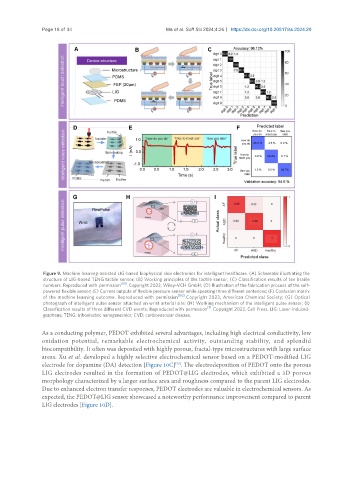
                Figure 9. Machine learning-assisted LIG-based biophysical skin electronics for intelligent healthcare. (A) Schematic illustrating the
                structure of LIG-based TENG tactile sensor; (B) Working principles of the tactile sensor; (C) Classification results of ten braille
                numbers. Reproduced with  permission [101] . Copyright 2023, Wiley-VCH GmbH; (D) Illustration of the fabrication process of the self-
                powered flexible sensor; (E) Current outputs of flexible pressure sensor while speaking three different sentences; (F) Confusion matrix
                of the machine learning outcome. Reproduced with  permission [102] . Copyright 2023, American Chemical Society; (G) Optical
                photograph of intelligent pulse sensor attached on wrist arterial site; (H) Working mechanism of the intelligent pulse sensor; (I)
                                                                       [3]
                Classification results of three different CVD events. Reproduced with  permission . Copyright 2023, Cell Press. LIG: Laser-induced-
                graphene; TENG: triboelectric nanogenerator; CVD: cardiovascular disease.

               As a conducting polymer, PEDOT exhibited several advantages, including high electrical conductivity, low
               oxidation  potential,  remarkable  electrochemical  activity,  outstanding  stability,  and  splendid
               biocompatibility. It often was deposited with highly porous, fractal-type microstructures with large surface
               areas. Xu et al. developed a highly selective electrochemical sensor based on a PEDOT-modified LIG
               electrode for dopamine (DA) detection [Figure 10C] . The electrodeposition of PEDOT onto the porous
                                                            [75]
               LIG electrodes resulted in the formation of PEDOT@LIG electrodes, which exhibited a 3D porous
               morphology characterized by a larger surface area and roughness compared to the parent LIG electrodes.
               Due to enhanced electron transfer responses, PEDOT electrodes are valuable in electrochemical sensors. As
               expected, the PEDOT@LIG sensor showcased a noteworthy performance improvement compared to parent
               LIG electrodes [Figure 10D].

