


Page 43 - Read Online
P. 43
Page 20 of 34                             Ma et al. Soft Sci 2024;4:26  https://dx.doi.org/10.20517/ss.2024.20


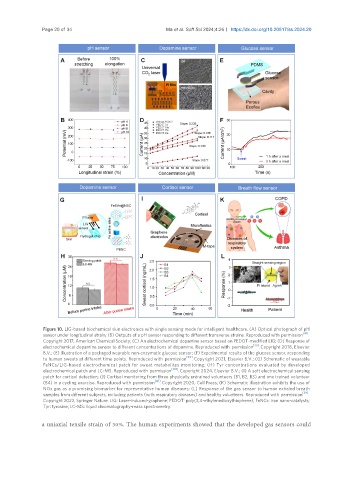
                Figure 10. LIG-based biochemical skin electronics with single sensing mode for intelligent healthcare. (A) Optical photograph of pH
                sensor under longitudinal strain; (B) Outputs of a pH sensor responding to different transverse strains. Reproduced with permission [41] .
                Copyright 2017, American Chemical Society; (C) An electrochemical dopamine sensor based on PEDOT-modified LIG; (D) Response of
                electrochemical dopamine sensor to different concentrations of dopamine. Reproduced with  permission [75] . Copyright 2018, Elsevier
                B.V.; (E) Illustration of a packaged wearable non-enzymatic glucose sensor; (F) Experimental results of the glucose sensor, responding
                to human sweats at different time points. Reproduced with  permission [40] . Copyright 2021, Elsevier B.V.; (G) Schematic of wearable
                FeNCs/LIG-based electrochemical patch for sweat metabolites monitoring; (H) Tyr concentrations evaluated by developed
                electrochemical patch and LC-MS. Reproduced with  permission [103] . Copyright 2024, Elsevier B.V.; (I) A soft electrochemical sensing
                patch for cortisol detection; (J) Cortisol monitoring from three physically untrained volunteers (B1, B2, B3) and one trained volunteer
                (B4) in a cycling exercise. Reproduced with  permission [43] . Copyright 2020, Cell Press; (K) Schematic illustration exhibits the use of
                NOx gas as a promising biomarker for representative human diseases; (L) Response of the gas sensor to human exhaled breath
                samples from different subjects, including patients (with respiratory diseases) and healthy volunteers. Reproduced with permission [39] .
                Copyright 2022, Springer Nature. LIG: Laser-induced-graphene; PEDOT: poly(3,4-ethylenedioxythiophene); FeNCs: iron nano-catalysts;
                Tyr: tyrosine; LC-MS: liquid chromatography-mass spectrometry.

               a uniaxial tensile strain of 30%. The human experiments showed that the developed gas sensors could

