


Page 35 - Read Online
P. 35
Page 12 of 34                             Ma et al. Soft Sci 2024;4:26  https://dx.doi.org/10.20517/ss.2024.20


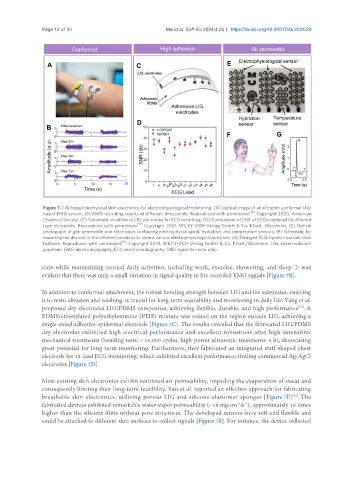
                Figure 7. LIG-based biophysical skin electronics for electrophysiological monitoring. (A) Optical image of an ultrathin conformal LIG-
                                                                                     [34]
                based EMG sensor; (B) EMG recording results at different time points. Reproduced with  permission  . Copyright 2020, American
                Chemical Society; (C) Schematic of adhesive LIG electrodes for ECG recording; (D) Comparison of SNR of ECGs captured by different
                                               [59]
                type electrodes. Reproduced with  permission  . Copyright 2021, WILEY-VCH Verlag GmbH & Co. KGaA, Weinheim; (E) Optical
                photograph of gas-permeable skin electronics containing electrophysiological, hydration, and temperature sensors; (F) Schematic for
                mounting the devices in the different positions to record various electrophysiological activities; (G) Enlarged ECG signals illustrate clear
                                          [83]
                features. Reproduced with  permission  . Copyright 2018, WILEY-VCH Verlag GmbH & Co. KGaA, Weinheim. LIG: Laser-induced-
                graphene; EMG: electromyography; ECG: electrocardiography; SNR: signal-to-noise ratio.
               days while maintaining normal daily activities, including work, exercise, showering, and sleep. It was
               evident that there was only a small variation in signal quality in the recorded EMG signals [Figure 7B].


               In addition to conformal attachment, the robust bonding strength between LIG and the substrates, enabling
               it to resist abrasion and washing, is crucial for long-term wearability and monitoring in daily life. Yang et al.
               proposed dry electrodes LIG/PDMS composites, achieving flexible, durable, and high performance . A
                                                                                                      [59]
               PDMS/ethoxylated polyethylenimine (PEIE) mixture was coated on the region outside LIG, achieving a
               single-sided adhesive epidermal electrode [Figure 7C]. The results revealed that the fabricated LIG/PDMS
               dry electrodes exhibited high electrical performance and excellent robustness after high-intensitive
               mechanical treatments (bending tests: > 10,000 cycles; high-power ultrasonic treatments: 5 h), showcasing
               great potential for long-term monitoring. Furthermore, they fabricated an integrated staff-shaped chest
               electrode for 12-lead ECG monitoring, which exhibited excellent performance rivaling commercial Ag/AgCl
               electrodes [Figure 7D].

               Most existing skin electronics exhibit restricted air permeability, impeding the evaporation of sweat and
               consequently limiting their long-term feasibility. Sun et al. reported an effective approach for fabricating
               breathable skin electronics, utilizing porous LIG and silicone elastomer sponges [Figure 7E] . The
                                                                                                    [83]
                                                                                   -1
               fabricated devices exhibited remarkable water-vapor permeability (~18 mg·cm ·h ), approximately 18 times
                                                                                 -2
               higher than the silicone films without pore structures. The developed sensors were soft and flexible and
               could be attached to different skin surfaces to collect signals [Figure 7F]. For instance, the device collected

