


Page 33 - Read Online
P. 33
Page 10 of 34                             Ma et al. Soft Sci 2024;4:26  https://dx.doi.org/10.20517/ss.2024.20


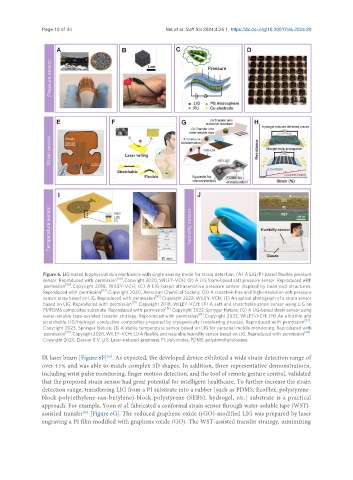
                Figure 6. LIG-based biophysical skin electronics with single sensing mode for strain detection. (A) A LIG/PI-based flexible pressure
                                        [60]
                sensor. Reproduced with  permission  . Copyright 2020, WILEY-VCH; (B) A LIG foam-based soft pressure sensor. Reproduced with
                       [36]
                permission  . Copyright 2018, WILEY-VCH; (C) A LIG-based ultrasensitive pressure sensor inspired by bean pod structures.
                                   [92]
                Reproduced with  permission  . Copyright 2020, American Chemical Society; (D) A crosstalk-free and high-resolution soft pressure
                                                     [93]
                sensor array based on LIG. Reproduced with permission  . Copyright 2022, WILEY-VCH; (E) An optical photograph of a strain sensor
                                             [37]
                based on LIG. Reproduced with  permission  . Copyright 2018, WILEY-VCH; (F) A soft and stretchable strain sensor using LIG on
                                                         [81]
                PI/PDMS composites substrate. Reproduced with permission  . Copyright 2022, Springer Nature; (G) A LIG-based strain sensor using
                                                                    [89]
                water-soluble tape-assisted transfer strategy. Reproduced with  permission  . Copyright 2023, WILEY-VCH; (H) An ultrathin and
                stretchable LIG/hydrogel conductive composites prepared by cryogenically transferring process. Reproduced with  permission [27] .
                Copyright 2023, Springer Nature; (I) A stable temperature sensor based on LIG for personal mobile monitoring. Reproduced with
                permission [35] . Copyright 2020, WILEY-VCH; (J) A flexible and wearable humidity sensor based on LIG. Reproduced with permission [38] .
                Copyright 2020, Elsevier B.V. LIG: Laser-induced-graphene; PI: polyimides; PDMS: polydimethylsiloxane.
                                     [81]
               IR laser beam [Figure 6F] . As expected, the developed device exhibited a wide strain detection range of
               over 15% and was able to match complex 3D shapes. In addition, three representative demonstrations,
               including wrist pulse monitoring, finger motion detection, and the tool of remote gesture control, validated
               that the proposed strain sensor had great potential for intelligent healthcare. To further increase the strain
               detection range, transferring LIG from a PI substrate into a rubber [such as PDMS, EcoFlex, polystyrene-
               block-poly(ethylene-ran-butylene)-block-polystyrene (SEBS), hydrogel, etc.] substrate is a practical
               approach. For example, Yoon et al. fabricated a conformal strain sensor through water-soluble tape (WST)-
               assisted transfer  [Figure 6G]. The reduced graphene oxide (rGO)-modified LIG was prepared by laser
                             [89]
               engraving a PI film modified with graphene oxide (GO). The WST-assisted transfer strategy, minimizing

