


Page 70 - Read Online
P. 70
Page 4 of 25                         Nagwade et al. Soft Sci 2023;3:24  https://dx.doi.org/10.20517/ss.2023.12


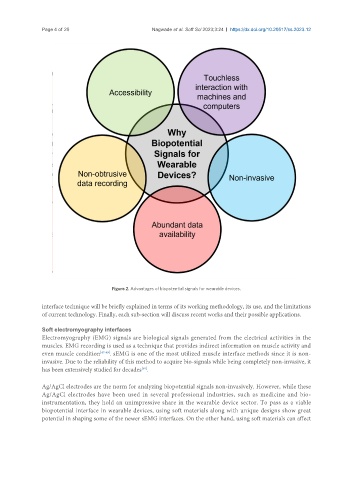
                                       Figure 2. Advantages of biopotential signals for wearable devices.


               interface technique will be briefly explained in terms of its working methodology, its use, and the limitations
               of current technology. Finally, each sub-section will discuss recent works and their possible applications.


               Soft electromyography interfaces
               Electromyography (EMG) signals are biological signals generated from the electrical activities in the
               muscles. EMG recording is used as a technique that provides indirect information on muscle activity and
               even muscle condition [47-49] . sEMG is one of the most utilized muscle interface methods since it is non-
               invasive. Due to the reliability of this method to acquire bio-signals while being completely non-invasive, it
                                                 [50]
               has been extensively studied for decades .
               Ag/AgCl electrodes are the norm for analyzing biopotential signals non-invasively. However, while these
               Ag/AgCl electrodes have been used in several professional industries, such as medicine and bio-
               instrumentation, they hold an unimpressive share in the wearable device sector. To pass as a viable
               biopotential interface in wearable devices, using soft materials along with unique designs show great
               potential in shaping some of the newer sEMG interfaces. On the other hand, using soft materials can affect

