


Page 186 - Read Online
P. 186
Page 10 of 35                           Nam et al. Soft Sci 2023;3:28  https://dx.doi.org/10.20517/ss.2023.19


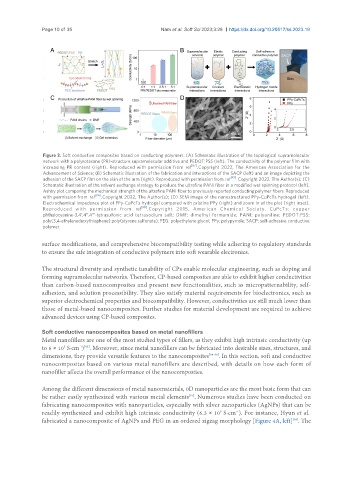
                Figure 3. Soft conductive composites based on conducting polymers. (A) Schematic illustration of the topological supramolecular
                network with a polyrotaxane (PR)-structure supramolecular additive and PEDOT:PSS (left). The conductivity of the polymer film with
                increasing  PR  content  (right).  Reproduced  with  permission  from  ref [87] . Copyright  2022,  The  American  Association  for  the
                Advancement of Science; (B) Schematic illustration of the fabrication and interactions of the SACP (left) and an image depicting the
                adhesion of the SACP film on the skin of the arm (right). Reproduced with permission from ref [83] . Copyright 2022, The Author(s); (C)
                Schematic illustration of the solvent exchange strategy to produce the ultrafine PANI fiber in a modified wet spinning protocol (left).
                Ashby plot comparing the mechanical strength of the ultrafine PANI fiber to previously reported conducting polymer fibers. Reproduced
                with permission from  ref [84] . Copyright 2022, The Author(s); (D) SEM image of the nanostructured PPy-CuPcTs hydrogel (left).
                Electrochemical impedance plot of PPy-CuPcTs hydrogel compared with pristine PPy (right) and zoom in of the plot (right inset).
                                                 [90]
                Reproduced  with  permission  from  ref  . Copyright  2015,  American  Chemical  Society.  CuPcTs:  copper
                phthalocyanine-3,4′,4′′,4′′′-tetrasulfonic  acid  tetrasodium  salt;  DMF:  dimethyl  formamide;  PANI:  polyaniline;  PEDOT:PSS:
                poly(3,4-ethylenedioxythiophene):poly(styrene sulfonate); PEG: polyethylene glycol; PPy: polypyrrole; SACP: self-adhesive conductive
                polymer.

               surface modifications, and comprehensive biocompatibility testing while adhering to regulatory standards
               to ensure the safe integration of conductive polymers into soft wearable electronics.


               The structural diversity and synthetic tunability of CPs enable molecular engineering, such as doping and
               forming supramolecular networks. Therefore, CP-based composites are able to exhibit higher conductivities
               than carbon-based nanocomposites and present new functionalities, such as micropatternability, self-
               adhesion, and solution processibility. They also satisfy material requirements for bioelectronics, such as
               superior electrochemical properties and biocompatibility. However, conductivities are still much lower than
               those of metal-based nanocomposites. Further studies for material development are required to achieve
               advanced devices using CP-based composites.

               Soft conductive nanocomposites based on metal nanofillers
               Metal nanofillers are one of the most studied types of fillers, as they exhibit high intrinsic conductivity (up
               to 6 × 10  S·cm ) . Moreover, since metal nanofillers can be fabricated into desirable sizes, structures, and
                            -1 [93]
                       5
               dimensions, they provide versatile features to the nanocomposites [94-96] . In this section, soft and conductive
               nanocomposites based on various metal nanofillers are described, with details on how each form of
               nanofiller affects the overall performance of the nanocomposites.


               Among the different dimensions of metal nanomaterials, 0D nanoparticles are the most basic form that can
               be rather easily synthesized with various metal elements . Numerous studies have been conducted on
                                                                 [97]
               fabricating nanocomposites with nanoparticles, especially with silver nanoparticles (AgNPs) that can be
               readily synthesized and exhibit high intrinsic conductivity (6.3 × 10  S·cm ). For instance, Hyun et al.
                                                                                 -1
                                                                           5
                                                                                                    [98]
               fabricated a nanocomposite of AgNPs and PEG in an ordered zigzag morphology [Figure 4A, left] . The

