


Page 144 - Read Online
P. 144
Li et al. Soft Sci 2023;3:22  https://dx.doi.org/10.20517/ss.2023.11             Page 7 of 15


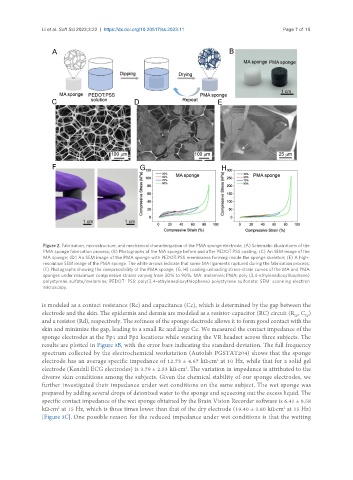
                Figure 2. Fabrication, microstructure, and mechanical characterization of the PMA sponge electrode. (A) Schematic illustrations of the
                PMA sponge fabrication process; (B) Photographs of the MA sponge before and after PEDOT:PSS coating; (C) An SEM image of the
                MA sponge; (D) An SEM image of the PMA sponge with PEDOT:PSS membranes forming inside the sponge skeleton; (E) A high-
                resolution SEM image of the PMA sponge. The white arrows indicate that some MA ligaments ruptured during the fabrication process;
                (F) Photographs showing the compressibility of the PMA sponge; (G, H) Loading-unloading stress-strain curves of the MA and PMA
                sponges under maximum compressive strains varying from 30% to 90%. MA: melamine; PMA: poly (3,4-ethylenedioxythiophene)
                polystyrene sulfate/melamine; PEDOT: PSS: poly(3,4-ethylenedioxythiophene) polystyrene sulfonate; SEM: scanning electron
                microscopy.

               is modeled as a contact resistance (Rc) and capacitance (Cc), which is determined by the gap between the
               electrode and the skin. The epidermis and dermis are modeled as a resistor-capacitor (RC) circuit (R , C )
                                                                                                        Ep
                                                                                                    Ep
               and a resistor (Rd), respectively. The softness of the sponge electrode allows it to form good contact with the
               skin and minimize the gap, leading to a small Rc and large Cc. We measured the contact impedance of the
               sponge electrodes at the Fp1 and Fp2 locations while wearing the VR headset across three subjects. The
               results are plotted in Figure 3B, with the error bars indicating the standard deviation. The full frequency
               spectrum collected by the electrochemical workstation (Autolab PGSTAT204) shows that the sponge
                                                                          2
               electrode has an average specific impedance of 12.73 ± 4.67 kΩ·cm  at 10 Hz, while that for a solid gel
               electrode (Kendall ECG electrodes) is 3.79 ± 2.53 kΩ·cm . The variation in impedance is attributed to the
                                                                2
               diverse skin conditions among the subjects. Given the chemical stability of our sponge electrodes, we
               further investigated their impedance under wet conditions on the same subject. The wet sponge was
               prepared by adding several drops of deionized water to the sponge and squeezing out the excess liquid. The
               specific contact impedance of the wet sponge obtained by the Brain Vision Recorder software is 6.41 ± 0.58
                                                                                                 2
               kΩ·cm  at 15 Hz, which is three times lower than that of the dry electrode (19.40 ± 3.60 kΩ·cm  at 15 Hz)
                     2
               [Figure 3C]. One possible reason for the reduced impedance under wet conditions is that the wetting

