


Page 23 - Read Online
P. 23
Son et al. Microbiome Res Rep. 2025;4:29  https://dx.doi.org/10.20517/mrr.2025.14  Page 5 of 19


                                             +
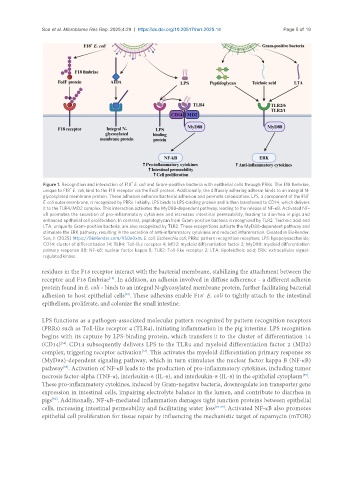
                Figure 1. Recognition and interaction of F18  E. coli and Gram-positive bacteria with epithelial cells through PRRs. The F18 fimbriae,
                         +
                unique to F18  E. coli, bind to the F18 receptor via the FedF protein. Additionally, the diffusely adhering adhesin binds to an integral N-
                                                                                                         +
                glycosylated membrane protein. These adhesins enhance bacterial adhesion and promote colonization. LPS, a component of the F18
                E. coli outer membrane, is recognized by PRRs. Initially, LPS binds to LPS-binding protein and is then transferred to CD14, which delivers
                it to the TLR4/MD2 complex. This interaction activates the MyD88-dependent pathway, leading to the release of NF-κB. Activated NF-
                κB promotes the secretion of pro-inflammatory cytokines and increases intestinal permeability, leading to diarrhea in pigs and
                enhanced epithelial cell proliferation. In contrast, peptidoglycan from Gram-positive bacteria is recognized by TLR2. Teichoic acid and
                LTA, unique to Gram-positive bacteria, are also recognized by TLR2. These recognitions activate the MyD88-dependent pathway and
                stimulate the ERK pathway, resulting in the secretion of anti-inflammatory cytokines and reduced inflammation. Created in BioRender.
                Son, J. (2025) https://BioRender.com/950e0xm. E. coli: Escherichia coli; PRRs: pattern recognition receptors; LPS: lipopolysaccharide;
                CD14: cluster of differentiation 14; TLR4: Toll-like receptor 4; MD2: myeloid differentiation factor 2; MyD88: myeloid differentiation
                primary response 88; NF-κB: nuclear factor kappa B; TLR2: Toll-like receptor 2; LTA: lipoteichoic acid; ERK: extracellular signal-
                regulated kinase.
               residues in the F18 receptor interact with the bacterial membrane, stabilizing the attachment between the
                                      [15]
               receptor and F18 fimbriae . In addition, an adhesin involved in diffuse adherence - a different adhesin
               protein found in E. coli - binds to an integral N-glycosylated membrane protein, further facilitating bacterial
                                                                     +
                                           [53]
               adhesion to host epithelial cells . These adhesins enable F18  E. coli to tightly attach to the intestinal
               epithelium, proliferate, and colonize the small intestine.

               LPS functions as a pathogen-associated molecular pattern recognized by pattern recognition receptors
               (PRRs) such as Toll-like receptor 4 (TLR4), initiating inflammation in the pig intestine. LPS recognition
               begins with its capture by LPS-binding protein, which transfers it to the cluster of differentiation 14
                      [54]
               (CD14) . CD14 subsequently delivers LPS to the TLR4 and myeloid differentiation factor 2 (MD2)
               complex, triggering receptor activation . This activates the myeloid differentiation primary response 88
                                                 [54]
               (MyD88)-dependent signaling pathway, which in turn stimulates the nuclear factor kappa B (NF-κB)
               pathway . Activation of NF-κB leads to the production of pro-inflammatory cytokines, including tumor
                      [55]
                                                                                                       [55]
               necrosis factor-alpha (TNF-α), interleukin-6 (IL-6), and interleukin-8 (IL-8) in the epithelial cytoplasm .
               These pro-inflammatory cytokines, induced by Gram-negative bacteria, downregulate ion transporter gene
               expression in intestinal cells, impairing electrolyte balance in the lumen, and contribute to diarrhea in
               pigs . Additionally, NF-κB–mediated inflammation damages tight junction proteins between epithelial
                   [56]
               cells, increasing intestinal permeability and facilitating water loss [57-59] . Activated NF-κB also promotes
               epithelial cell proliferation for tissue repair by influencing the mechanistic target of rapamycin (mTOR)

