


Page 41 - Read Online
P. 41
Qu et al. J Transl Genet Genom 2023;7:3-16  https://dx.doi.org/10.20517/jtgg.2022.16  Page 11


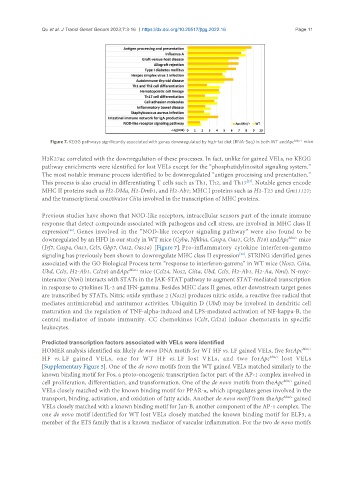
                  Figure 7. KEGG pathways significantly associated with genes downregulated by high-fat diet (RNA-Seq) in both WT andApc Min/+  mice.


               H3K27ac correlated with the downregulation of these processes. In fact, unlike for gained VELs, no KEGG
               pathway enrichments were identified for lost VELs except for the “phosphatidylinositol signaling system.”
               The most notable immune process identified to be downregulated “antigen processing and presentation.”
                                                                                    [27]
               This process is also crucial in differentiating T cells such as Th1, Th2, and Th17 . Notable genes encode
               MHC II proteins such as H2-DMa, H2-Dmb1, and H2-Ab1; MHC I proteins such as H2-T23 and Gm11127;
               and the transcriptional coactivator Ciita involved in the transcription of MHC proteins.

               Previous studies have shown that NOD-like receptors, intracellular sensors part of the innate immune
               response that detect compounds associated with pathogens and cell stress, are involved in MHC class II
               expression . Genes involved in the “NOD-like receptor signaling pathway” were also found to be
                        [30]
               downregulated by an HFD in our study in WT mice (Cyba, Nfkbia, Casp4, Oas3, Ccl5, Il18) andApc Min/+  mice
               (Irf7, Casp4, Oas3, Ccl5, Gbp7, Oas2, Oas1a)  [Figure 7]. Pro-inflammatory  cytokine  interferon-gamma
               signaling has previously been shown to downregulate MHC class II expression . STRING identified genes
                                                                                  [30]
               associated with the GO Biological Process term “response to interferon-gamma” in WT mice (Nos2, Ciita,
               Ubd, Ccl5, H2-Ab1, Ccl20) andApc Min/+  mice (Ccl24, Nos2, Ciita, Ubd, Ccl5, H2-Ab1, H2-Aa, Nmi). N-myc-
               interactor (Nmi) interacts with STATs in the JAK-STAT pathway to augment STAT-mediated transcription
               in response to cytokines IL-2 and IFN-gamma. Besides MHC class II genes, other downstream target genes
               are transcribed by STATs. Nitric oxide synthase 2 (Nos2) produces nitric oxide, a reactive free radical that
               mediates antimicrobial and antitumor activities. Ubiquitin D (Ubd) may be involved in dendritic cell
               maturation and the regulation of TNF-alpha-induced and LPS-mediated activation of NF-kappa-B, the
               central mediator of innate immunity. CC chemokines (Ccl5, Ccl24) induce chemotaxis in specific
               leukocytes.


               Predicted transcription factors associated with VELs were identified
               HOMER analysis identified six likely de novo DNA motifs for WT HF vs. LF gained VELs, five forApc Min/+
               HF  vs. LF  gained  VELs,  one  for  WT  HF  vs. LF  lost  VELs,  and  two  forApc Min/+   lost  VELs
               [Supplementary Figure 5]. One of the de novo motifs from the WT gained VELs matched similarly to the
               known binding motif for Fos, a proto-oncogenic transcription factor part of the AP-1 complex involved in
               cell proliferation, differentiation, and transformation. One of the de novo motifs from theApc Min/+  gained
               VELs closely matched with the known binding motif for PPAR-α, which upregulates genes involved in the
               transport, binding, activation, and oxidation of fatty acids. Another de novo motif from theApc Min/+  gained
               VELs closely matched with a known binding motif for Jun-B, another component of the AP-1 complex. The
               one de novo motif identified for WT lost VELs closely matched the known binding motif for ELF3, a
               member of the ETS family that is a known mediator of vascular inflammation. For the two de novo motifs

