


Page 108 - Read Online
P. 108
Page 10 of 15                        Niu et al. J. Mater. Inf. 2025, 5, 45  https://dx.doi.org/10.20517/jmi.2025.22


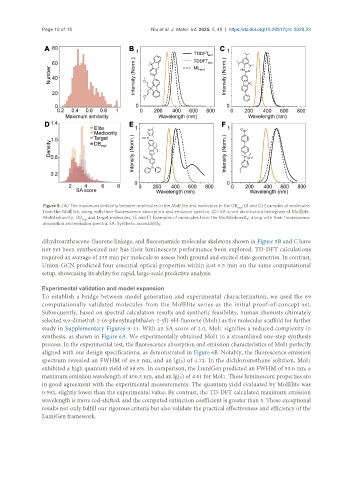
                Figure 5. (A) The maximum similarity between molecules in the MolElite and molecules in the DB ; (B and C) Examples of molecules
                                                                                 exp
                from the MolElite, along with their fluorescence absorption and emission spectra; (D) SA score distribution histogram of MolElite,
                MolMediocrity,  DB , and target molecules; (E and F) Examples of molecules from the MolMediocrity, along with their fluorescence
                             exp
                absorption and emission spectra. SA: Synthetic accessibility.
               dihydroanthracene-fluorene linkage, and fluorenamide molecular skeletons shown in Figure 5B and C have
               not yet been synthesized nor has their luminescent performance been explored. TD-DFT calculations
               required an average of 235 min per molecule to assess both ground and excited state geometries. In contrast,
               Union-GCN predicted four essential optical properties within just 0.5 min on the same computational
               setup, showcasing its ability for rapid, large-scale predictive analysis.

               Experimental validation and model expansion
               To establish a bridge between model generation and experimental characterization, we used the 69
               computationally validated molecules from the MolElite series as the initial proof-of-concept set.
               Subsequently, based on spectral calculation results and synthetic feasibility, human chemists ultimately
               selected 9,9-dimethyl-2-(6-phenylnaphthalen-2-yl)-9H-fluorene (Mol1) as the molecular scaffold for further
               study in Supplementary Figures 9-11. With an SA score of 2.0, Mol1 signifies a reduced complexity in
               synthesis, as shown in Figure 6A. We experimentally obtained Mol1 in a streamlined one-step synthesis
               process. In the experimental test, the fluorescence absorption and emission characteristics of Mol1 perfectly
               aligned with our design specifications, as demonstrated in Figure 6B. Notably, the fluorescence emission
               spectrum revealed an FWHM of 49.8 nm, and an lg(ε) of 4.72. In the dichloromethane solution, Mol1
               exhibited a high quantum yield of 88.6%. In comparison, the LumiGen predicted an FWHM of 53.0 nm, a
               maximum emission wavelength of 400.3 nm, and an lg(ε) of 4.61 for Mol1. These luminescent properties are
               in good agreement with the experimental measurements. The quantum yield evaluated by MolElite was
               0.592, slightly lower than the experimental value. By contrast, the TD-DFT calculated maximum emission
               wavelength is more red-shifted, and the computed extinction coefficient is greater than 5. These exceptional
               results not only fulfill our rigorous criteria but also validate the practical effectiveness and efficiency of the
               LumiGen framework.

