


Page 103 - Read Online
P. 103
Niu et al. J. Mater. Inf. 2025, 5, 45  https://dx.doi.org/10.20517/jmi.2025.22   Page 5 of 15


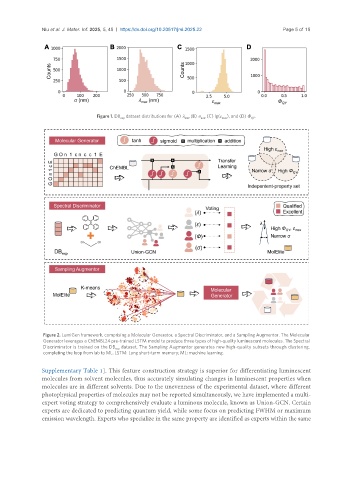
                                  Figure 1. DB  dataset distributions for (A) λ , (B) σ , (C) lg(ε  ), and (D) Φ .
                                          exp                  emi   emi    max       QY


                Figure 2. LumiGen framework, comprising a Molecular Generator, a Spectral Discriminator, and a Sampling Augmentor. The Molecular
                Generator leverages a ChEMBL24 pre-trained LSTM model to produce three types of high-quality luminescent molecules. The Spectral
                Discriminator is trained on the DB  dataset. The Sampling Augmentor generates new high-quality subsets through clustering,
                                        exp
                completing the loop from lab to ML. LSTM: Long short-term memory; ML: machine learning.
               Supplementary Table 1]. This feature construction strategy is superior for differentiating luminescent
               molecules from solvent molecules, thus accurately simulating changes in luminescent properties when
               molecules are in different solvents. Due to the unevenness of the experimental dataset, where different
               photophysical properties of molecules may not be reported simultaneously, we have implemented a multi-
               expert voting strategy to comprehensively evaluate a luminous molecule, known as Union-GCN. Certain
               experts are dedicated to predicting quantum yield, while some focus on predicting FWHM or maximum
               emission wavelength. Experts who specialize in the same property are identified as experts within the same

