


Page 110 - Read Online
P. 110
Page 12 of 15                        Niu et al. J. Mater. Inf. 2025, 5, 45  https://dx.doi.org/10.20517/jmi.2025.22

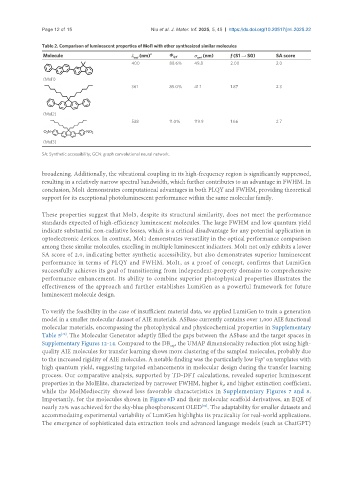
               Table 2. Comparison of luminescent properties of Mol1 with other synthesized similar molecules
                Molecule                     λ  (nm) a    Φ QY     σ  (nm)     f (S1 → S0)    SA score
                                              emi
                                                                   emi
                                             400          88.6%    49.8        2.00           2.0

                (Mol1)
                                             361          85.0%    41.1        1.87           2.3


                (Mol2)
                                             538          11.0%    119.9       1.66           2.7


                (Mol3)
               SA: Synthetic accessibility; GCN: graph convolutional neural network.


               broadening. Additionally, the vibrational coupling in its high-frequency region is significantly suppressed,
               resulting in a relatively narrow spectral bandwidth, which further contributes to an advantage in FWHM. In
               conclusion, Mol1 demonstrates computational advantages in both PLQY and FWHM, providing theoretical
               support for its exceptional photoluminescent performance within the same molecular family.

               These properties suggest that Mol3, despite its structural similarity, does not meet the performance
               standards expected of high-efficiency luminescent molecules. The large FWHM and low quantum yield
               indicate substantial non-radiative losses, which is a critical disadvantage for any potential application in
               optoelectronic devices. In contrast, Mol1 demonstrates versatility in the optical performance comparison
               among these similar molecules, excelling in multiple luminescent indicators. Mol1 not only exhibits a lower
               SA score of 2.0, indicating better synthetic accessibility, but also demonstrates superior luminescent
               performance in terms of PLQY and FWHM. Mol1, as a proof of concept, confirms that LumiGen
               successfully achieves its goal of transitioning from independent-property domains to comprehensive
               performance enhancement. Its ability to combine superior photophysical properties illustrates the
               effectiveness of the approach and further establishes LumiGen as a powerful framework for future
               luminescent molecule design.


               To verify the feasibility in the case of insufficient material data, we applied LumiGen to train a generation
               model in a smaller molecular dataset of AIE materials. ASBase currently contains over 1,000 AIE functional
               molecular materials, encompassing the photophysical and physicochemical properties in Supplementary
                      [26]
               Table 5 . The Molecular Generator adeptly filled the gaps between the ASbase and the target spaces in
               Supplementary Figures 12-14. Compared to the DB , the UMAP dimensionality reduction plot using high-
                                                          exp
               quality AIE molecules for transfer learning shows more clustering of the sampled molecules, probably due
               to the increased rigidity of AIE molecules. A notable finding was the particularly low Fsp  on templates with
                                                                                          3
               high quantum yield, suggesting targeted enhancements in molecular design during the transfer learning
               process. Our comparative analysis, supported by TD-DFT calculations, revealed superior luminescent
               properties in the MolElite, characterized by narrower FWHM, higher k , and higher extinction coefficient,
                                                                            r
               while the MolMediocrity showed less favorable characteristics in Supplementary Figures 7 and 8.
               Importantly, for the molecules shown in Figure 6D and their molecular scaffold derivatives, an EQE of
                                                                     [36]
               nearly 25% was achieved for the sky-blue phosphorescent OLED . The adaptability for smaller datasets and
               accommodating experimental variability of LumiGen highlights its practicality for real-world applications.
               The emergence of sophisticated data extraction tools and advanced language models (such as ChatGPT)

